Visitor's guide

The Maison Hannon

Why does a particular place become a heritage site?

The story of this house reflects a gradual shift in perception. Built as a private home, it was at risk of demolition when its inhabitants died. It was listed in order to prevent this irreversible loss, well before the quality of its decor was acknowledged – and it is the beauty of that very same decor that captivates us today. As tastes change, so too does the way in which society decides what it wishes to preserve.

In this case, as with others, a building does not instantly become a cultural heritage site. This is a process involving oversights, rediscoveries and public decisions. Should we protect what remains, revive the past or support different uses? Should we preserve a witness to bygone times or allow the city to continue its metamorphosis? Is this building a cultural landmark, a tourist attraction or a fragment of a local identity?

Through this exhibition, we invite you to follow this property’s transition from a lived-in home to a building open to the public, and to find ways of answering these questions.

Total Work of Art

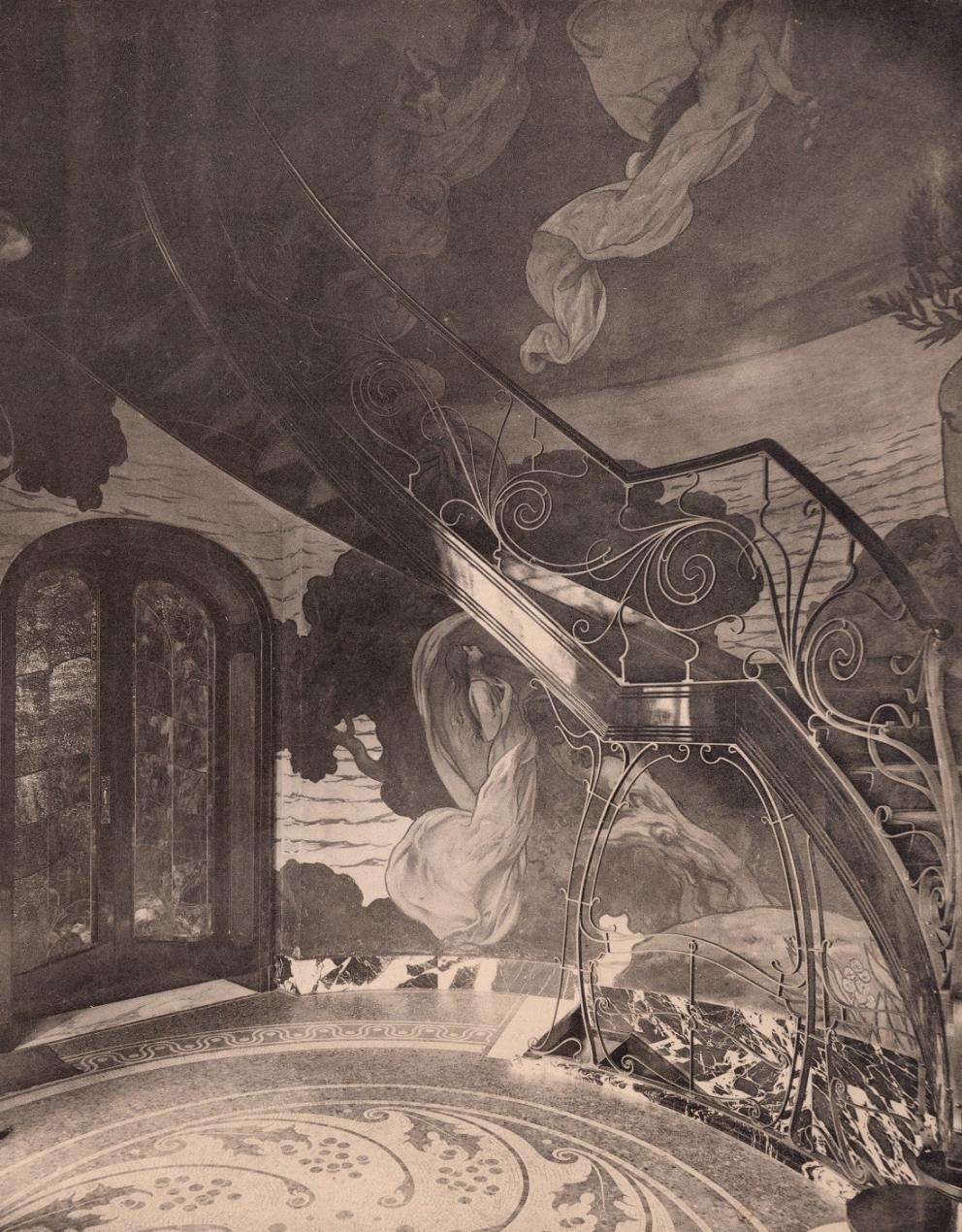
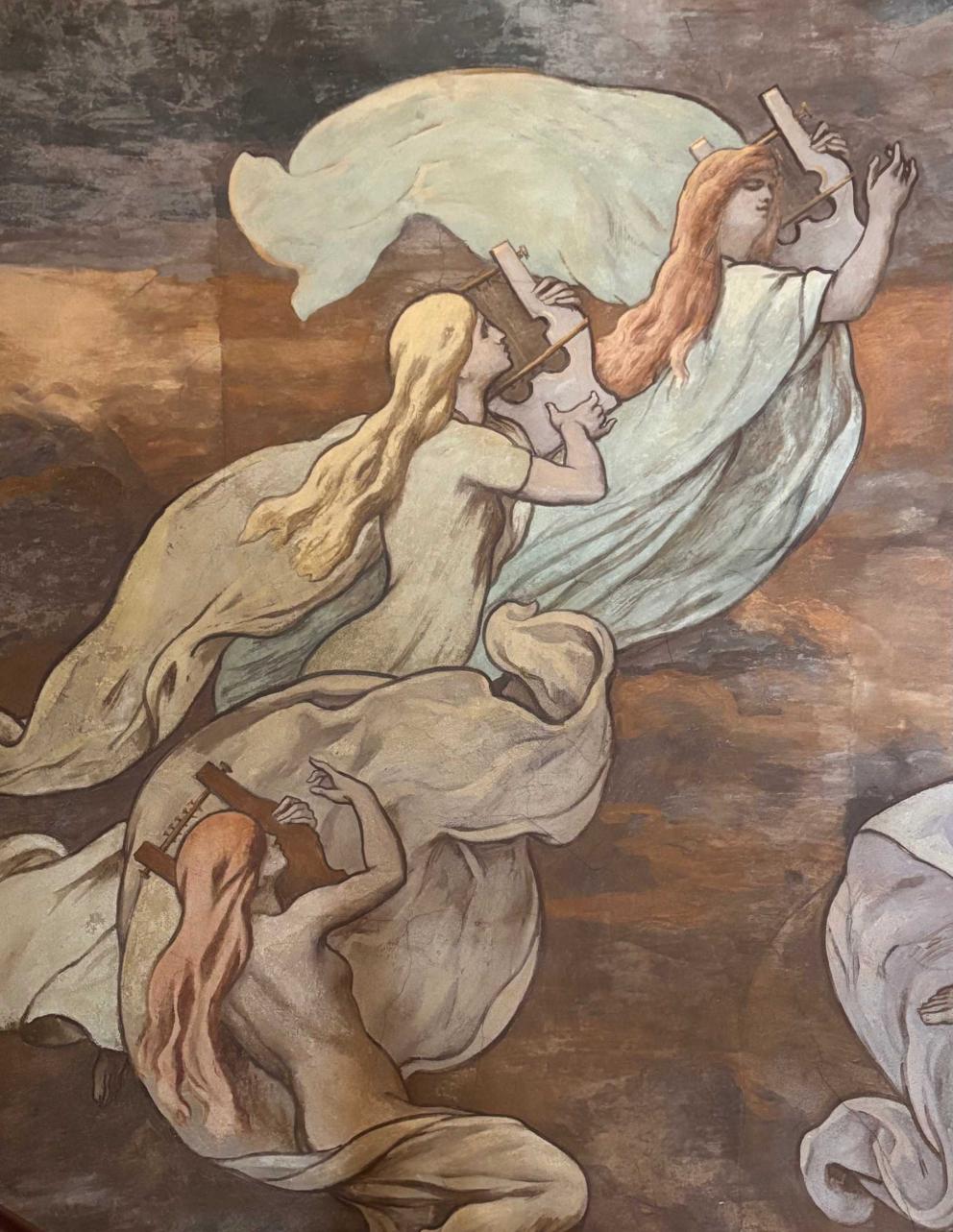
The main hall is bathed in a golden light, its colours combining harmoniously. The monumental fresco by Paul-Albert Baudouin catches the visitor’s eye at the entrance to the room. Chosen to create this work on account of the significant role he played in reviving the fresco technique, the artist responded to the clients’ desire to include references to Classical Antiquity in their home. The wall painting, which spreads out in the manner of a tapestry, takes the form of an allegory. It depicts two shepherds contemplating the horizon, while a female figure scatters petals, symbolising the joys of life. Above her, six more female figures are seen moving through the air, each one holding a lyre; these embody the harmony of nature.

This harmony extends throughout the stairwell. Visitors find themselves included in the scene, as if they are standing at the edge of a wood. The staircase, whose lines appear enlivened by their circular configurations, contributes to this immersive quality.

As one advances towards the centre of the hall, the entire space is revealed, from the ground to the domed ceiling. A golden spiral rises from the mosaic floor, extends upwards through the stairwell and leads to the dome, adorned with stylised flowers. These are arranged according to the Fibonacci sequence, its ratios linked to the concept of a natural harmony. The ceiling light represents the meristem, the part of a plant that gives rise to the structures of a flower; this emphasises the aim of translating a creative power drawn from nature into a visible form.

All the art forms in this room harmonise and complete each other, producing a cohesive composition. This is known as a Total Work of Art.

Jules Brunfaut, the architect who designed this house, based the configuration of the space here on this stairwell, so that the living areas are set out around it and benefit from an inflow of natural light. The reception rooms look out onto the Avenue Brugmann, while the dining room overlooks the garden.

The Evolution of a Language

The Maison Hannon may be seen as a key stage in the work of its architect, Jules Brunfaut. The former dining room, in which you are now standing, presents the story of his stylistic development. He designed the first house for Édouard Hannon, his fellow civil engineering student, in 1876. This was located in the city of Dombasle, in Lorraine.

Hannon introduced him to a social circle comprising the intellectuals and industrialists who attended the Salon hosted by his sister, Mariette Hannon-Rousseau, with its links to the Solvay Company. During those years, Brunfaut’s work was characterised by an eclecticism inspired by the Flemish and Italian Renaissances. He retained a method learned from his teacher Henri Beyaert; this involved choosing, organising and reinterpreting references in order to create a personal language. The projects he carried out in connection with the Solvay Company, often abroad, further expanded this architectural vocabulary through his contact with local styles.

The year 1893 witnessed the emergence of a new expression of modernity. Soon known as ‘Art Nouveau,’ it formed a response to the eclecticism that had run its course. Brunfaut did not change his direction, but extended his repertoire. Collaborations with pioneering interior designers such as Gustave Serrurier-Bovy and Émile Gallé brought together architecture, furniture and the applied arts to form a unified whole. The layout of the rooms was based on their use, with daylight flooding in through large windows, ensuring a coherent overall effect.

Built between 1902 and 1904, the Maison Hannon aligns with this approach. It appears as the culmination of a gradual, expertly mastered evolution whose initial ideas were perceived a decade previously. The work remains as a combination of different influences, its unique quality stemming from the encounter between its architect’s talent and its commissioners’ erudition.

After this phase, Brunfaut turned to institutional commissions, to heritage protection and a new vision of city planning. In this way, he extended the work he carried out here to another level, pursuing a quest for coherence, comfortable living conditions and unity with the historic environment.

The Applied Arts

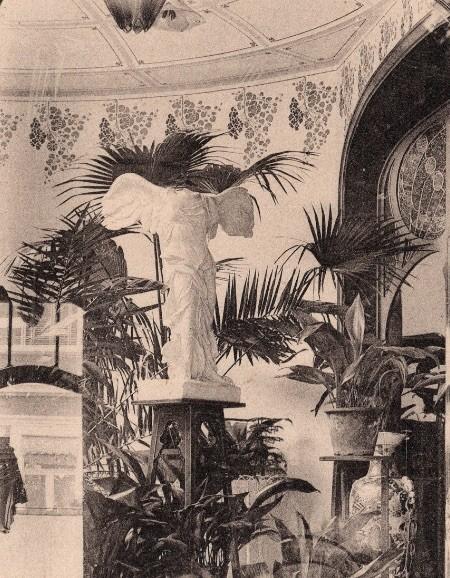
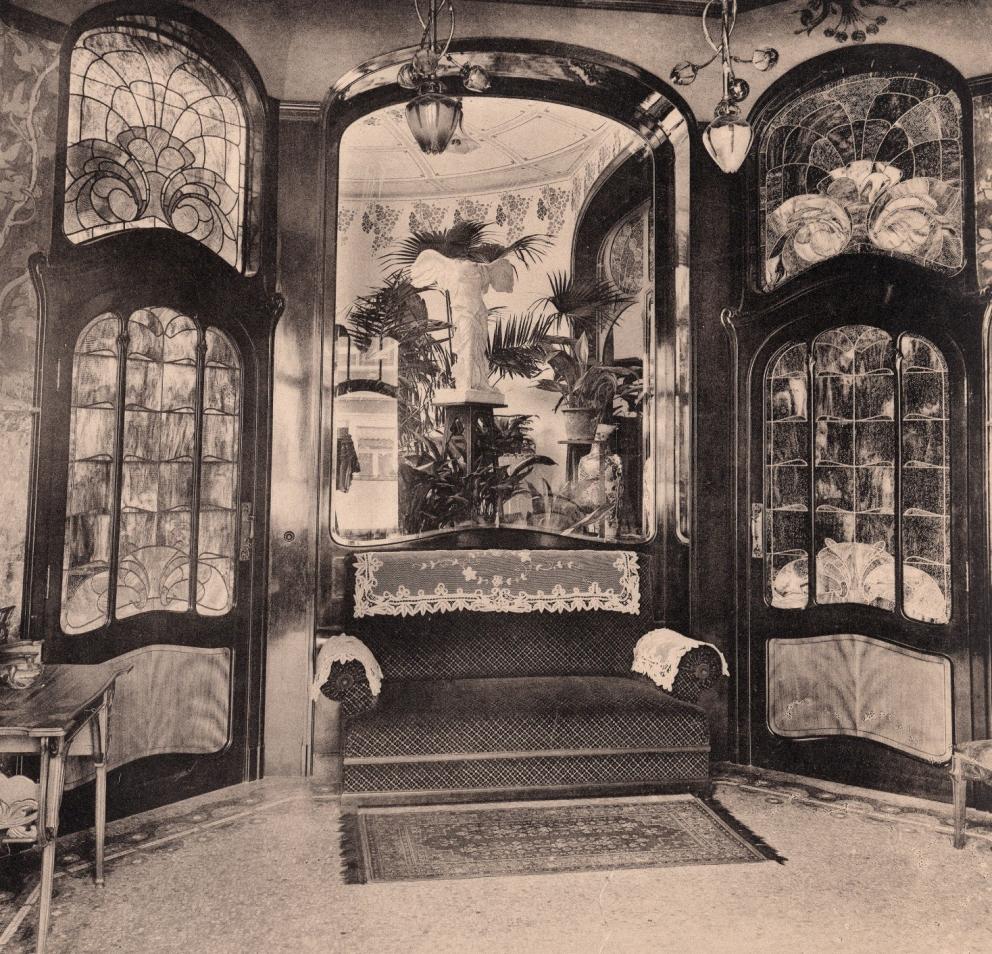
Strategically positioned, the winter garden is one of the most unique areas in the house. It is set at a slightly raised level, its plentiful windows letting in abundant light. Designed as a genuine greenhouse in the architectural sense of the term, it combines a metallic structure – which was originally gilded – encircling stained glass windows and glazed panels, with functional elements: a floor mosaic and a slate plant container heated by built-in radiators. The large Satsuma vases and the ceiling motifs, created with stencils, introduce a decorative note inspired by East Asia.

The Art Nouveau movement saw the applied arts, with their emphasis on surfaces destined for practical use – glass, textiles, mosaics and mural paintings – working in partnership with architecture. The hierarchy governing the various artistic expressions became blurred in the interests of developing a shared vision.

The master glass artist Raphaël Évaldre, who was taught by Louis Comfort Tiffany, designed the winter garden’s stained glass windows; their lines follow those of the metallic framework, as if the glass were echoing the curve of the iron, continuing its movements. Light flows into the space through the glazed ceiling. Henri Baes extended this opening with his arrangement of painted, stencilled motifs, producing the impression that the metallic structures have been invaded by imaginary plants.

Here, nothing is superimposed. The sense of continuity stems from the connections between the various forms, with one material following the other, while the motifs amplify the surrounding architecture.

When restoring the winter garden today, it is important to understand this dialogue between iron, glass, painting and architecture, so as to re-establish the coherence that gives the space its impact.

The Classical Sanctuary

Visitors entering the main drawing room find themselves in a reception room that opens extensively onto the exterior; this provided the inhabitants with a view of the prestigious Avenue Brugmann, while also ensuring that they themselves were seen.

Here too, Jules Brunfaut used a palette of ochre shades for his architecture, which serves as a setting for Paul-Albert Baudouin’s fresco. The wall on the left shows allegorical scenes connected with the senses and the late summer harvest, set against a background of Pompeian red. The scene featured on the opposite wall is crowned with branches of the hop plant, which produces a stimulating yet relaxing beer.

These frescoes, which evoke the Age of Antiquity, chime with the design projects kept in the chest of drawers, attesting to the artist’s notable visual culture. These references to the past correlate with the idea of timeless beauty embodied in the bust of the young girl attributed to Francesco Laurana (ca. 1430-1502) that stands on the mantelpiece.

The photographs published in L’Émulation in 1905 clearly show a lived-in interior; we sense the presence of the Hannon’s daughter, Denise, we see the family dog lying by the hearth, the carefully arranged albums and the traces of past celebrations… A letter from Édouard Hannon to his grandchildren, which includes a drawing he made of Saint Nicholas, reminds us that the Christmas presents were given out in this very spot in front of the fireplace. The ideal of harmony sought by the couple is expressed in a particularly touching way in this room.

‘The Classical sanctuary’, as Édouard Hannon liked to call his home, takes on its full meaning here. Far from being a rigid setting, the decor in the drawing room reveals a couple who wanted their interior to reflect their ideal: an erudition enriched with travel, poetic sensibilities and a lifestyle shaped by beauty. It invites us to ask what a house conveys to us once its inhabitants have gone: a form, a style or the more personal imprint of an art of inhabiting a building.

Via Lorraine

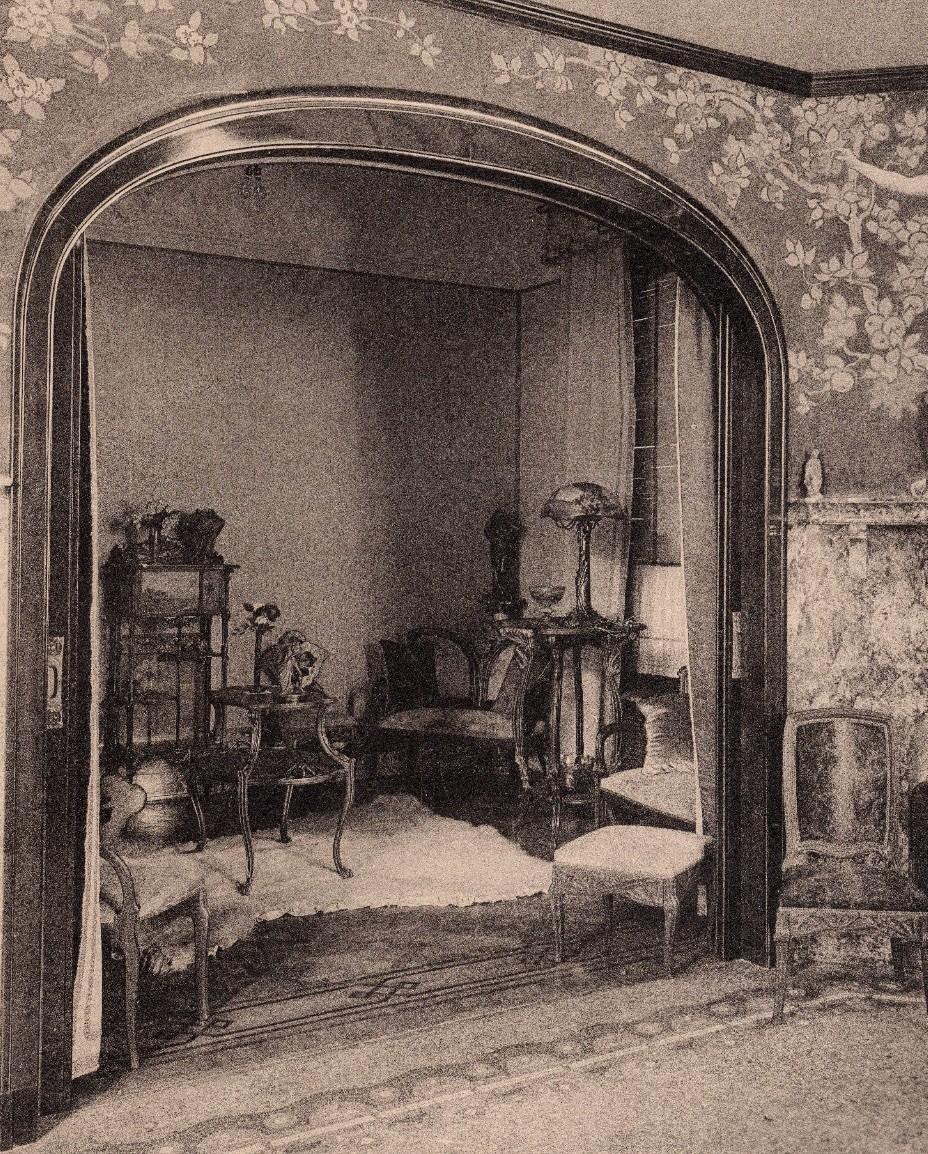
The small drawing room has now partly regained its identity, which is closely connected to Marie Debard’s native Lorraine. This room evokes a personal, sensitive memory through the decorative arts there.

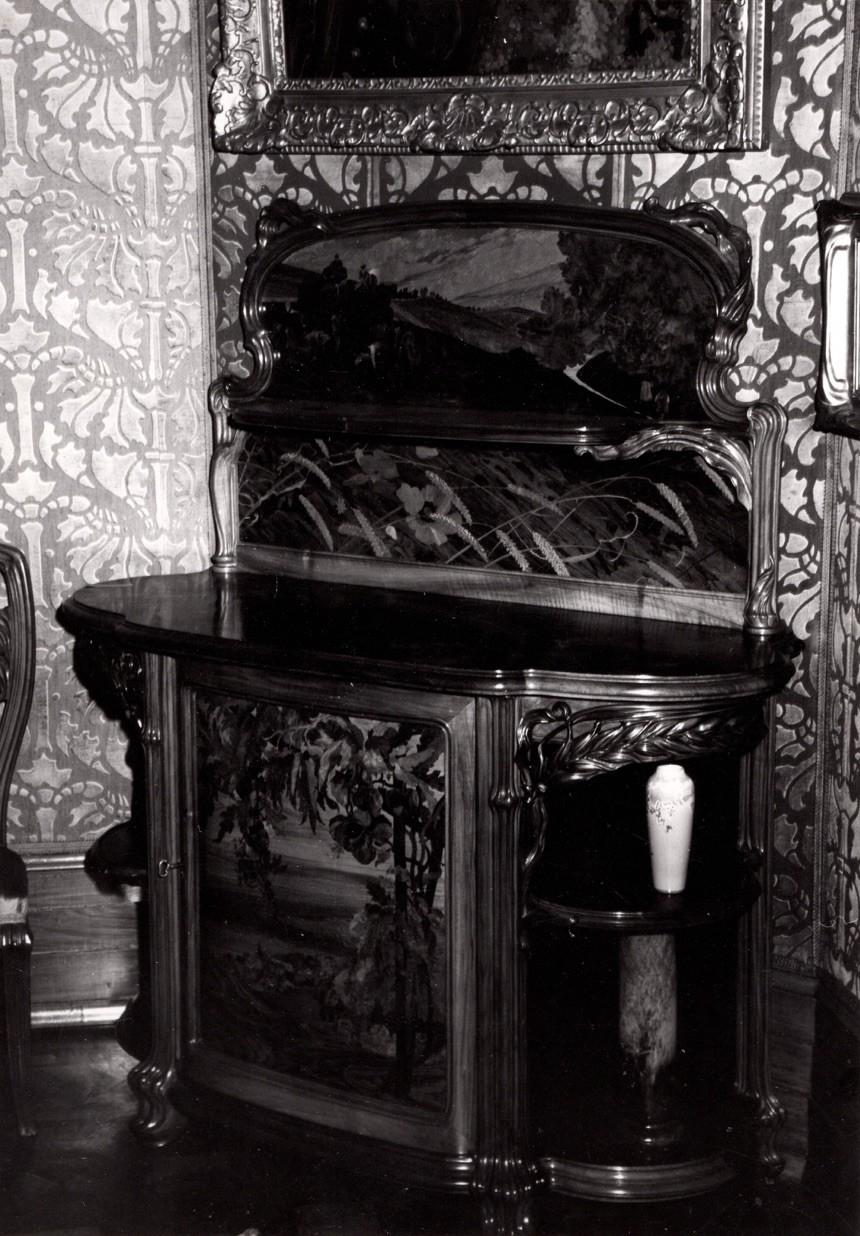
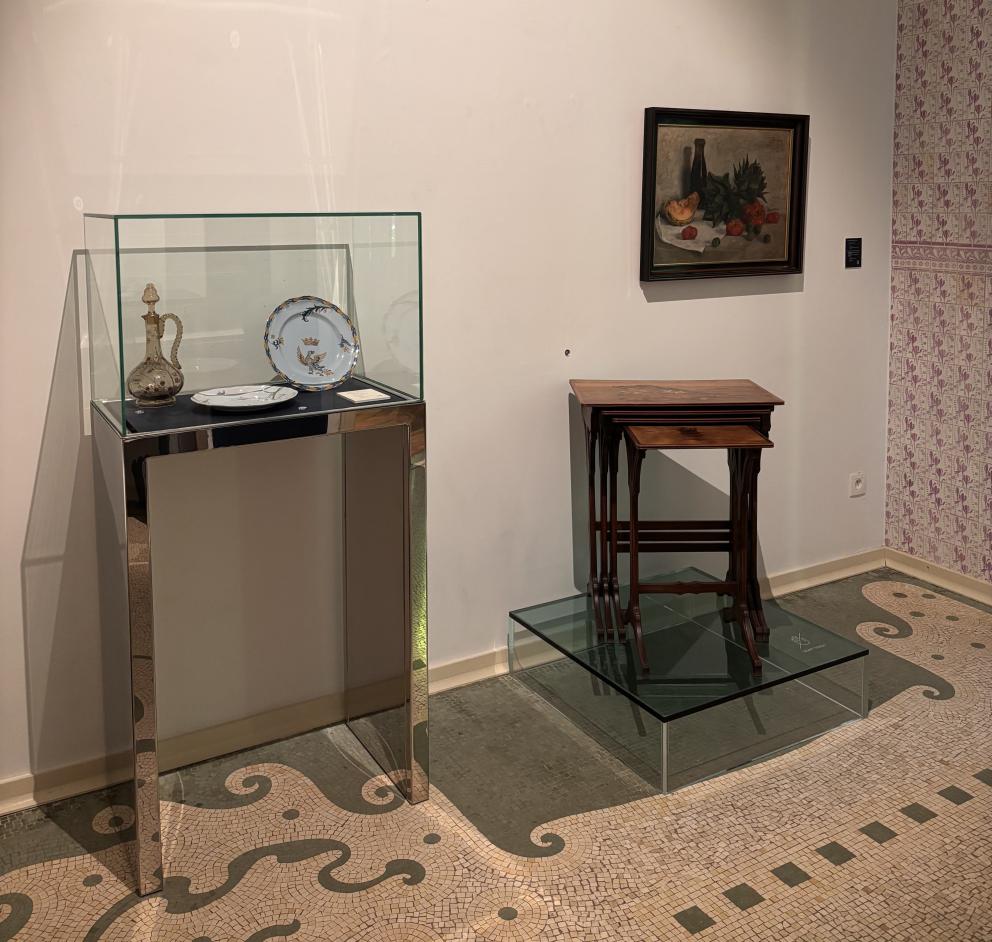
In the late 19th century, the expression ‘decorative arts’ denoted those objects designed to be as practical as they were beautiful: furniture, glassware, light fixtures, textiles, wallpaper and marquetry work. In a house designed as a total work of art, these arts are neither simply accessories nor secondary elements – they form a continuation of the architecture and also offer a more intimate form of personalisation, through their usage itself. Here, the furniture and crystalware commissioned from the Gallé company combine to create an ambience evoking the city of Nancy. The decision to commission Émile Gallé, a native of Lorraine, the cross of Lorraine engraved on a vase and the thistle motifs on the central shelving unit all serve to indicate Marie Debard’s aesthetic and emotional choices.

Assuming ownership of the house in 1931, the couple’s daughter, Denise Hannon, maintained and conveyed that heritage until her death in 1965.

The original pieces of furniture displayed in this room form part of the Aux Ombelles series, one of the most popular products made by the Gallé company. Given to the Museum of Decorative Arts in Paris by Denise Hannon’s descendants, they have been loaned to us especially for this restoration project.

This work is based on archival material and meticulous artisanal expertise. An invoice mentioning the qualities of a yellow fabric was used to guide the process of recreating the wall covering. It was woven according to the historical models produced by the Prelle company (based in Lyon), then installed and stretched ‘in the English style.’ The textile restores the original mellow character of the drawing room; light glides through the space, the colours blend perfectly and harmony is regained.

From Home to Heritage

It is now time to proceed to the first floor, where you will discover the history of the house after its owners left.

As you go up the stairs, you will notice a small landing on the eleventh step. While this pause in the climb certainly meets a structural need, it also reflects a habit adopted by the Hannon couple, who liked to stop there and recite poetry by Homer or Verhaeren. Sound is the artform that breathes life into material elements and suffuses the architecture with energy.

Journeys

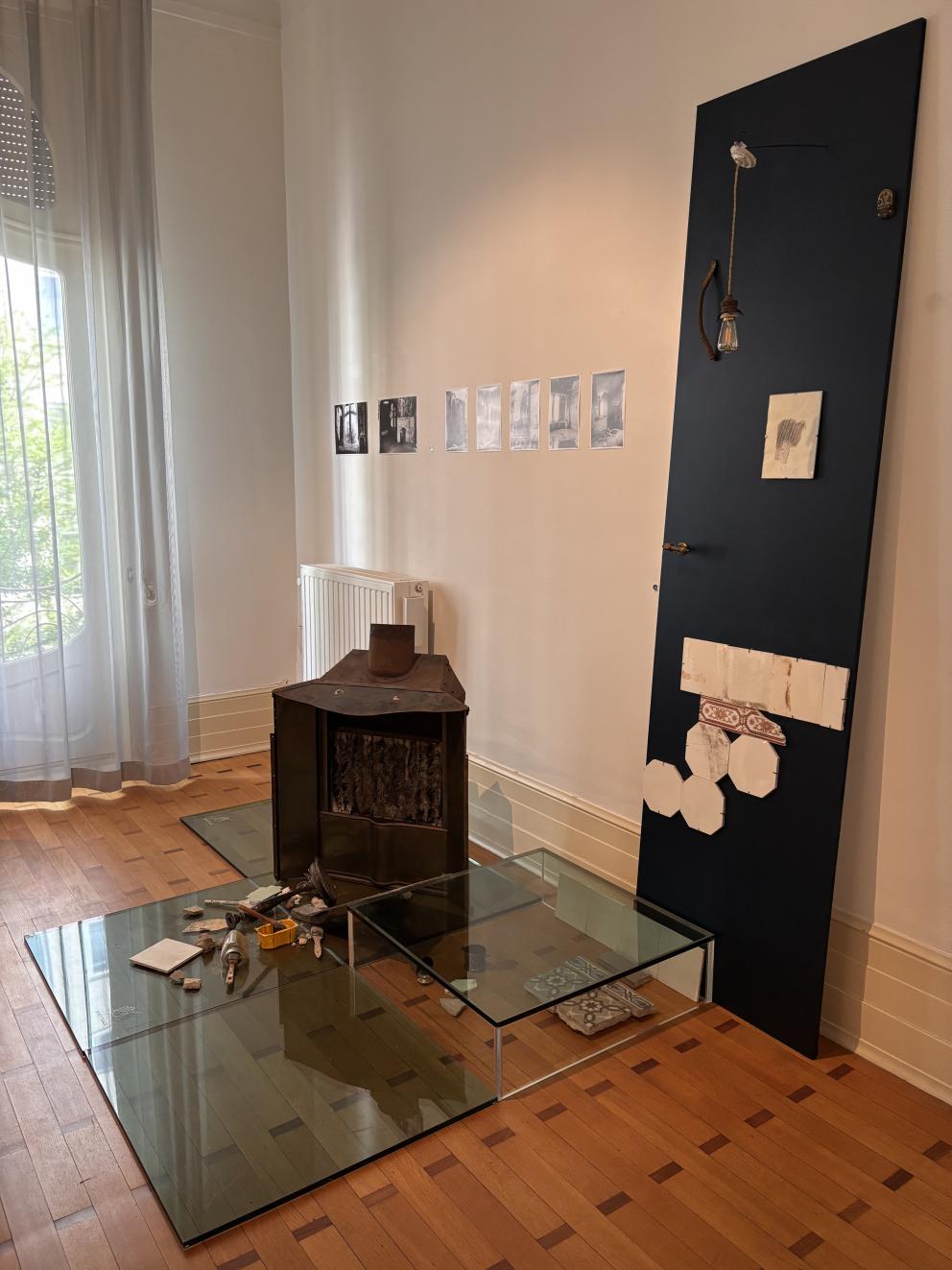
This room, now emptied of its original decor, firstly tells the story of a house that had been inhabited for over fifty years and suddenly found itself with no occupants. Following the death of Denise Hannon in 1965, the building ceased to be a home. No projects were carried out by the series of buyers who acquired it, and the house attracted the attention of property speculators. Seen as outdated, Art Nouveau had not yet attained the status of a noteworthy cultural heritage. For nearly fifteen years, worries over the fate of the house were exacerbated by deterioration, thefts and vandalism; it seemed likely that the property would eventually be demolished.

A building’s status often changes when it is on the brink of demolition. It is no longer an interior to be inhabited, but a building to be preserved – or allowed to disappear. These were burning questions in the 1970s. The house’s existence was threatened by plans for a block of flats, its interior regarded as an example of the architect’s eccentricity.

In 1973, Jules Brunfaut’s daughter, Marie Van Mulders-Brunfaut, alerted the authorities to this danger; at the same time, the historian Franco Borsi presented the house in his book Bruxelles 1900, paying particular attention to its stairwell. Perceptions of the building gradually changed – perhaps what was left of the property, even though it might be incomplete, was worth protecting? The listed status conferred on the house in 1976 was initially limited to its façades and roof, the interior remaining at risk. In 1979, the municipality of Saint-Gilles bought the property and the adjoining houses to save them from demolition. In a decisive shift, the building became a collective cultural heritage. At the same time, French museums acquired some of the original furniture.

This was a lengthy transition, however. Thefts continued to occur until the entire property was listed in 1982. Among all the debris, architects and restorers recognised pieces of a fragmented past: a ceiling rose, ceramic tiles, a scrap of wallpaper… The task was now to understand the various layers and accept that there would be missing elements. In this way, the house entered a new phase in its life, as it underwent the process of patrimonialisation. This is implemented when a site has ceased to be simply old, and is seen as worthy of being preserved for future generations.

This room represents the moment when that shift occurred. It invites us to reflect on what we decide to save when a house loses its inhabitants.

The ‘Hôtel Hannon’

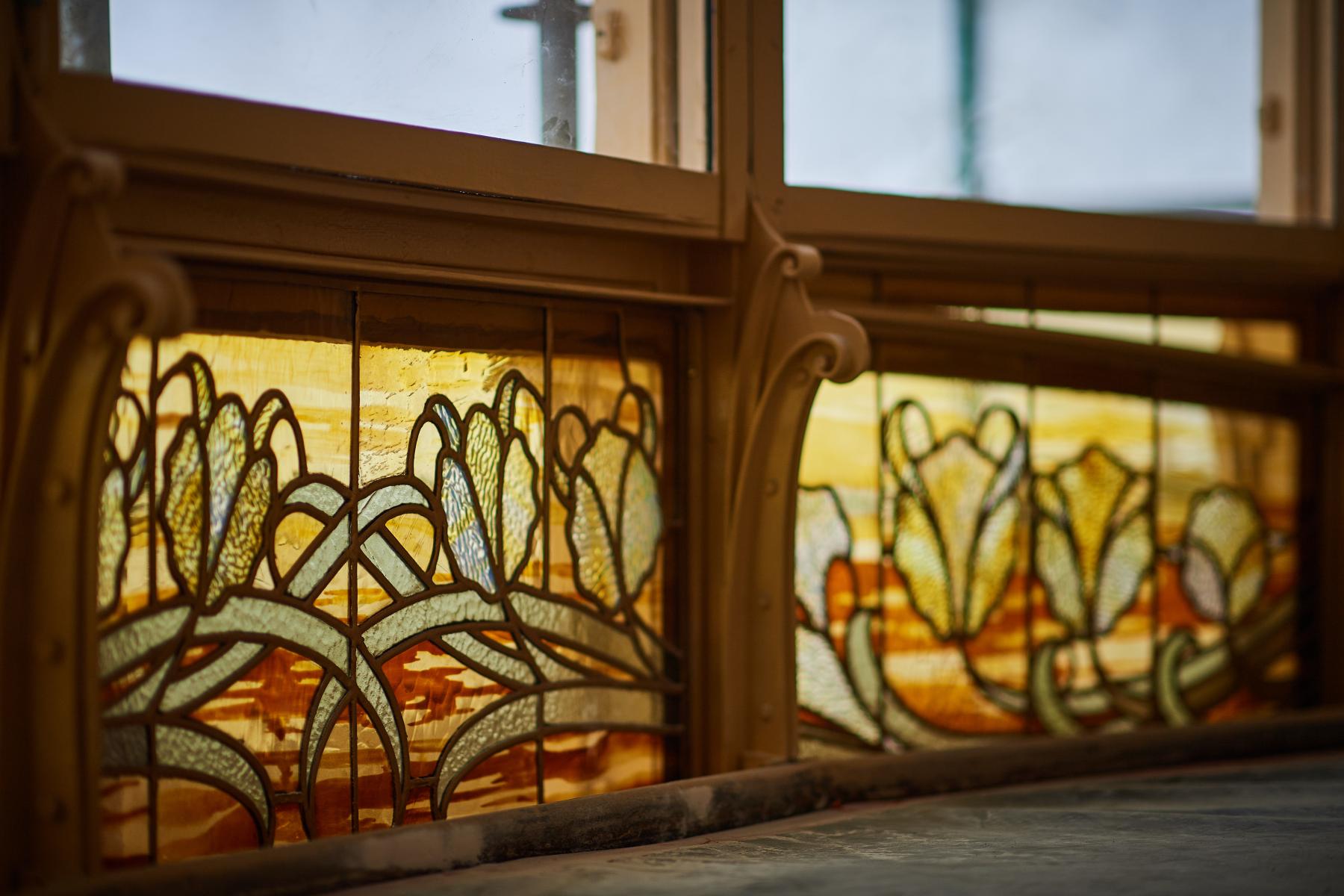
Now a listed building, the house experienced a distinctly transformative period between 1983 and 1988. What should be done with a property in a fragile condition? Should it be restored to its original state or renovated – consolidating whatever remains and completing elements whenever possible? Decisive choices were made: the stained-glass windows were repaired and reassembled, the winter garden was sandblasted and then repainted in dark brown, and the wrought ironwork was painted an antique bronze

green. The original colours were not recreated, but whatever could be seen was preserved. Paul-Albert Baudouin’s frescoes underwent an initial restoration process, while certain spaces at the back of the building urgently needed reconstructing, due to the presence of dry-rot fungus. The conservation and redevelopment project was overseen by the art historian Marcel Celis.

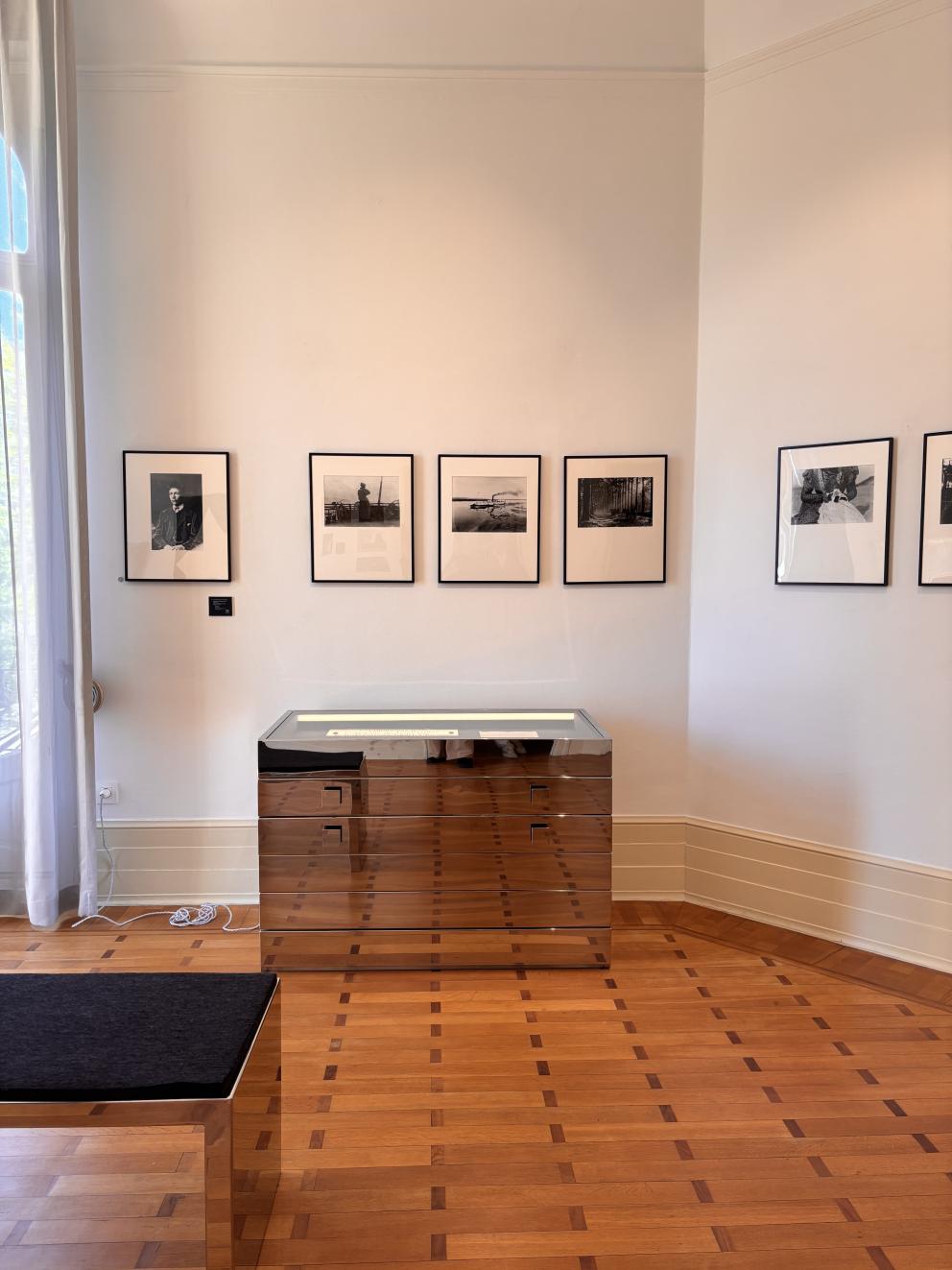
In order to underline its important status, the house was renamed the ‘Hôtel Hannon’ – ‘hôtel’ in this context being an imposing type of town house. However, a town house is different from a town mansion. The building has no carriage entrance, no servants’ staircase and no inordinately large spaces. This name change indicates a shift, as the house ceased to be a private dwelling and became a usable space, signalling the beginning of a new chapter. At the instigation of the municipality of Saint-Gilles and its Mayor, Charles Picqué, the house was used by Contretype, an arts centre dedicated to contemporary photography, as its headquarters. Exhibitions, residencies and visual experiments were held here from 1980 to 2014. The house, now reborn, also led to the rediscovery of Édouard Hannon’s photographic work as a pioneering Belgian pictorialist. His images, which he produced during his business trips for the Solvay Company, reveal a sensitive, socially-conscious perception. This rediscovery has been supplemented with the archival material and recollections provided by his descendant Patrick Théry.

In this way, the Maison Hannon changed its status; once an elegant town house, it became an art venue. Its survival was due more to its repurposing than to cultural significance. Once inhabited, the building now contained other forms of life and other imaginative visions.

Becoming a museum

Contretype left the building in 2014, and silence descended once more. The house found itself without a role, as if suspended between two functions. Its value as a cultural heritage was acknowledged – but what could be done with a property that had no clear purpose?

Furthermore, the house was wearing away. The woodwork was no longer watertight, the monumental frescoes were flaking, and some areas had been almost reduced to dust. At the instigation of the municipality of Saint-Gilles and the Brussels Region, a vast programme of work was initiated with aim of safeguarding the building.

Yet its future purpose still needed defining. In 2019, the Horta Museum took on the role of providing scientific expertise and advice relating to museums, at the behest of the Municipality and the Brussels Region. A partnership with the St’Art Invest company set a clear way forward; the building would be open to the public and host exhibitions, and the Maison Hannon would be presented as part of the Art Nouveau heritage.

A decisive new step was taken in 2022, when the Maison Hannon became an autonomous entity, supporting its own mission. Backed by both public and private companies, the non-profit ‘Maison Hannon’ organisation embarked on a second programme of works aimed at recreating elements that had disappeared and restoring some of its original splendour to the building.

On 1 June 2023, the house opened as a museum. Its contemporary scenography was created by Asli Çiçek, while the Oilinwater studio was commissioned to create its graphic identity, giving the project its visual form.

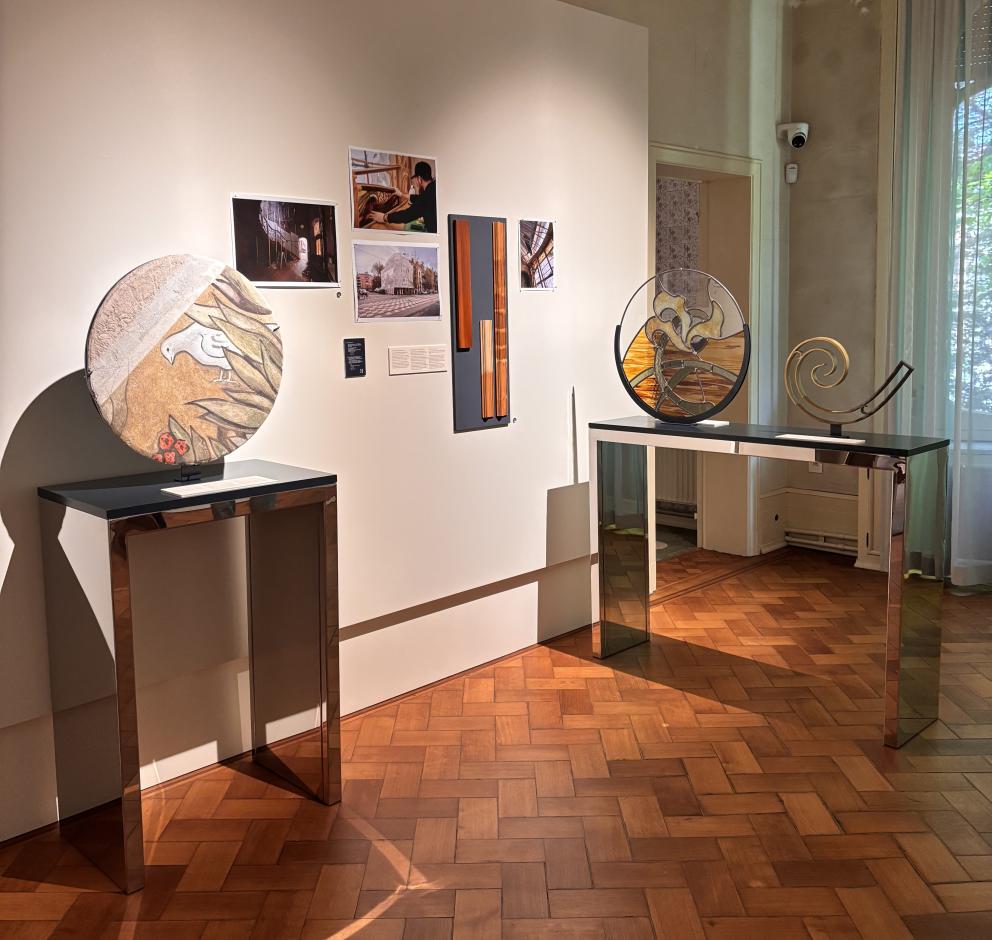
The temporary exhibitions programme establishes connections between Art Nouveau and the first examples of modernity (1850-1920), as well as current creative activity.

After Restoration: To Freeze in Time or Revitalise?

This house’s trajectory shows that a heritage is built slowly over time, through successive layers of perception, usages and choices. As we approach the 2030s, the restoration process is continuing as an open project. The public will now have the opportunity to follow its stages: the crucial conservation work that stabilises surviving elements; the restoration work that gives the whole building its coherence, without erasing the passage of time and aiming for reversibility, and, finally, the reproduction of missing items. This may be achieved when sources are reliable, the intention being to restore the house’s logic, its atmosphere and, sometimes, the objects that made sense there.

Now that this home has become part of our shared heritage, what are we going to transmit, and how? Should the first floor continue to host exhibitions, in order to maintain a lively sense of energy, or should this monument become a silent, frozen time capsule? As in previous times, society determines what it recognises as heritage and how it wants to inhabit this.

The success achieved over the last few years has firmly established the house among the remarkable examples of cultural heritage to be found in Brussels. Yet this status does not cancel out questions or remove responsibilities, as nothing is guaranteed. Quite the reverse, for it leads to a new stage – that of a future to build together. You now play a vital role in imagining what this house should be tomorrow.

‘The restoration of a monument should not involve dispersing its furniture, which is a true remnant of the past whose recreation would be a praiseworthy undertaking.’

‘… I propose making a vow to preserve the exterior and interior of old dwellings, monuments and houses that are historic in character, and which are powerful evocations of eras and styles. Why should they not be true historical museums?’

Jules Brunfaut