Van der Stappen: The Sphinx
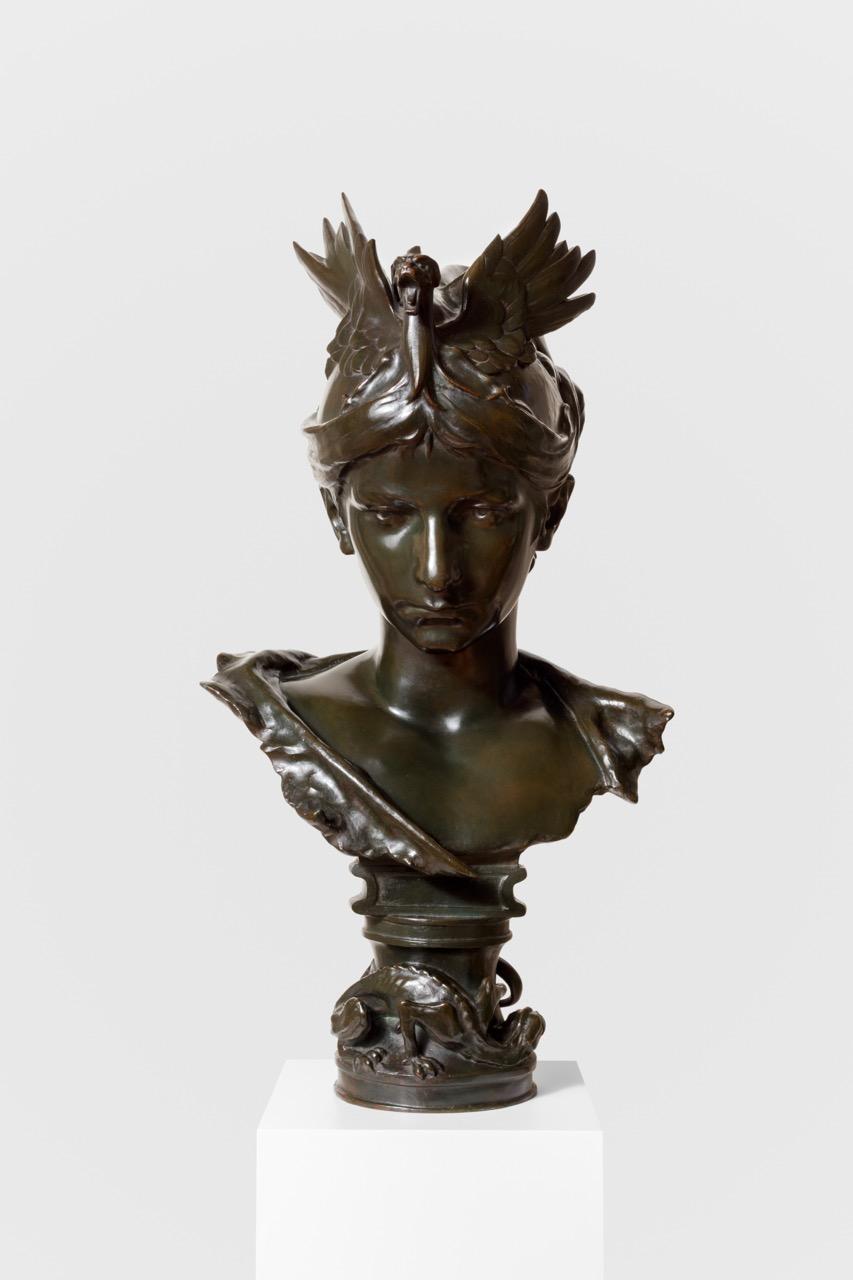
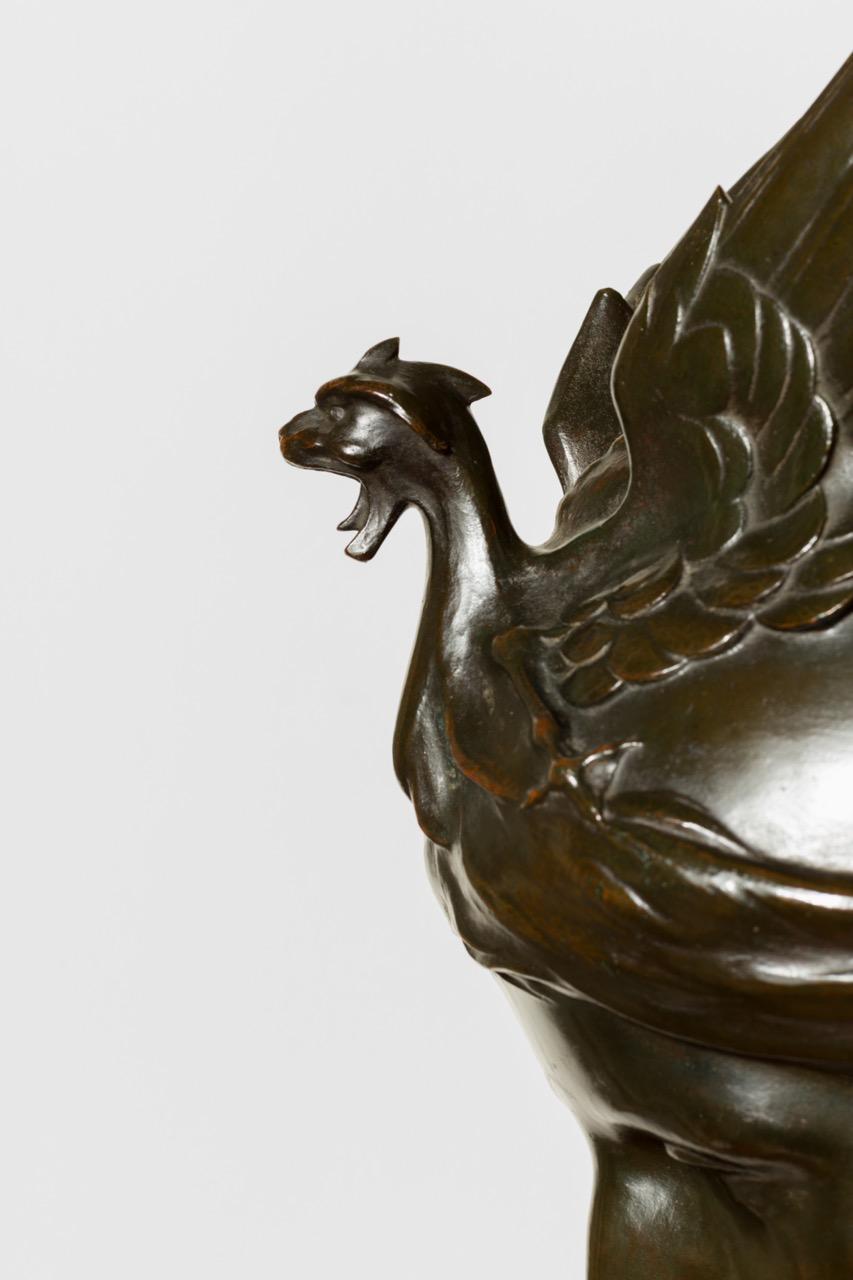
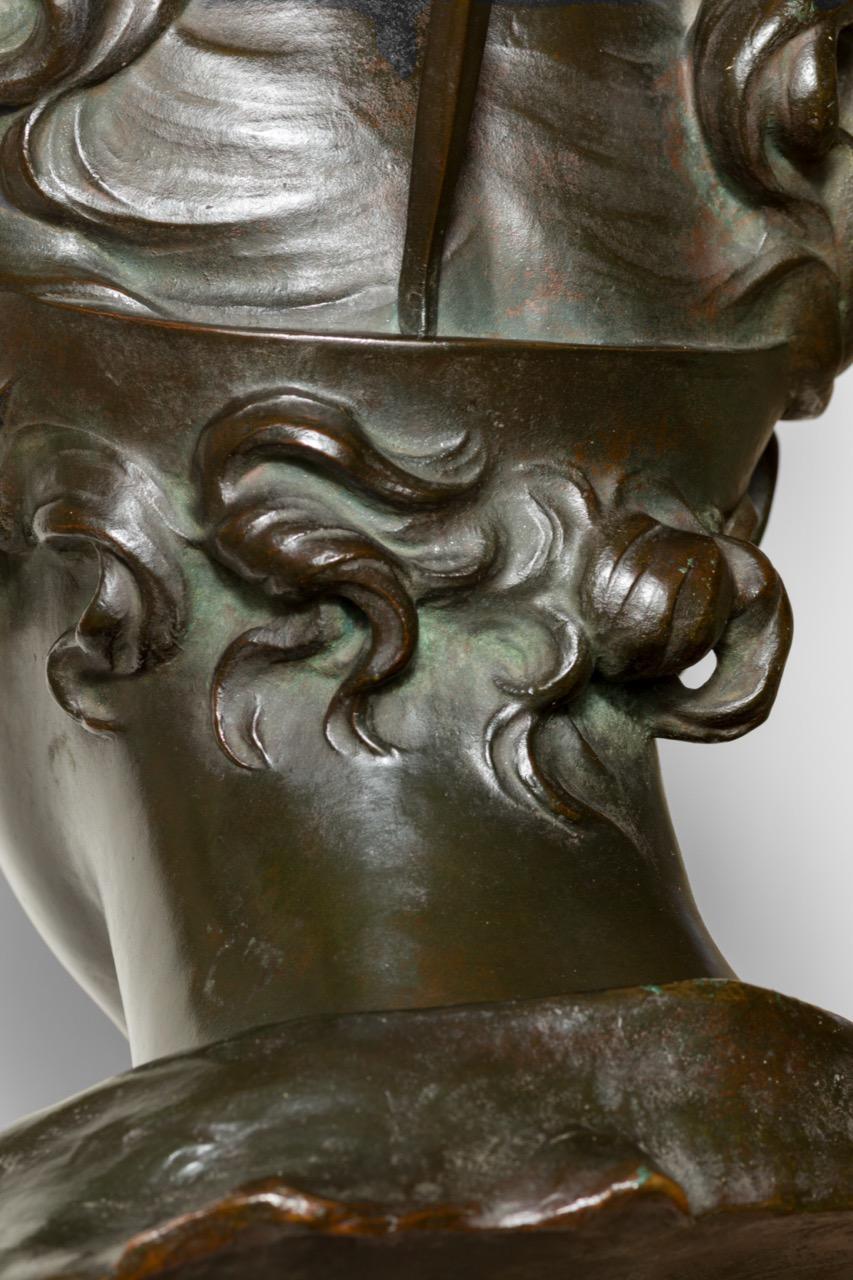
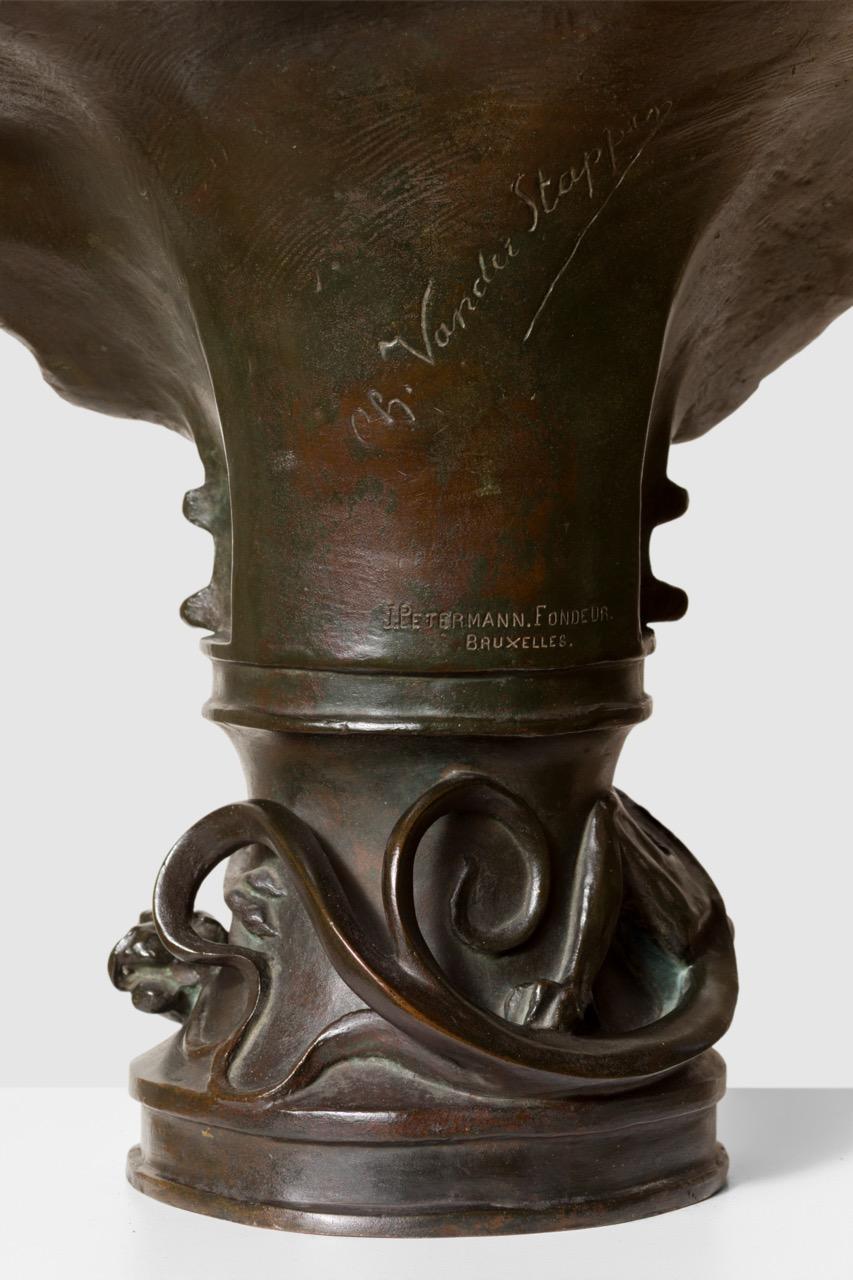
Among the works that paved the way for Belgian Symbolism, the Sphinx by Charles Van der Stappen holds a very important place. Inspired by a Florentine muse, with the addition of a chimera rising from her hair and a dragon curling around the base, the sculpture avoids telling a story outright. Instead, it suggests. The slightly tilted head and inward gaze create a silence that feels intentional, almost authoritative. By stepping away from naturalistic storytelling, Van der Stappen shifts toward an art that no longer explains the world, but opens a more introspective space.
This Sphinx (ca. 1883) reflects the precise moment when the Belgian sculpture seeks a new path in regard to spiritual aspirations. Van der Stappen captures hallmarks from a fin de siècle imagination imbued with mystery, liminality, and ambivalence. Between the dragon, grounded, and the chimera crowning her head, the feminine figure seems suspended between matter and spirit, darkness and light. This interplay of opposite is meeting symbolist intuition where truth is not given but must be discerned in the space between.
Made around 1883, this Sphinx captures the moment when Belgian sculpture sought a new direction aligned with spiritual aspirations. Van der Stappen draws on a fin‑de‑siècle imagination full of mystery, liminality, and ambiguity. Between the grounded dragon and the chimera perched above, the central figure seems suspended between matter and spirit, shadow and light. These contrasts echo symbolist thinking, where meaning does not sit on the surface but emerges in the gaps, in what is suggested rather than stated.
The blank cartouche on the base pushes this idea even further. With no title to guide interpretation, the silence becomes intentional. It is up to the viewer to bring their own reading to the work. In this sense, the Sphinx is one of the earliest signs of a Belgian symbolism that, even before being named, was already turning artworks into open questions rather than fixed answers.
Brussels, private collection.
Photos : Maison Hannon, Silvia Cappellari