Paul-Albert Baudoüin — The Joys of Life
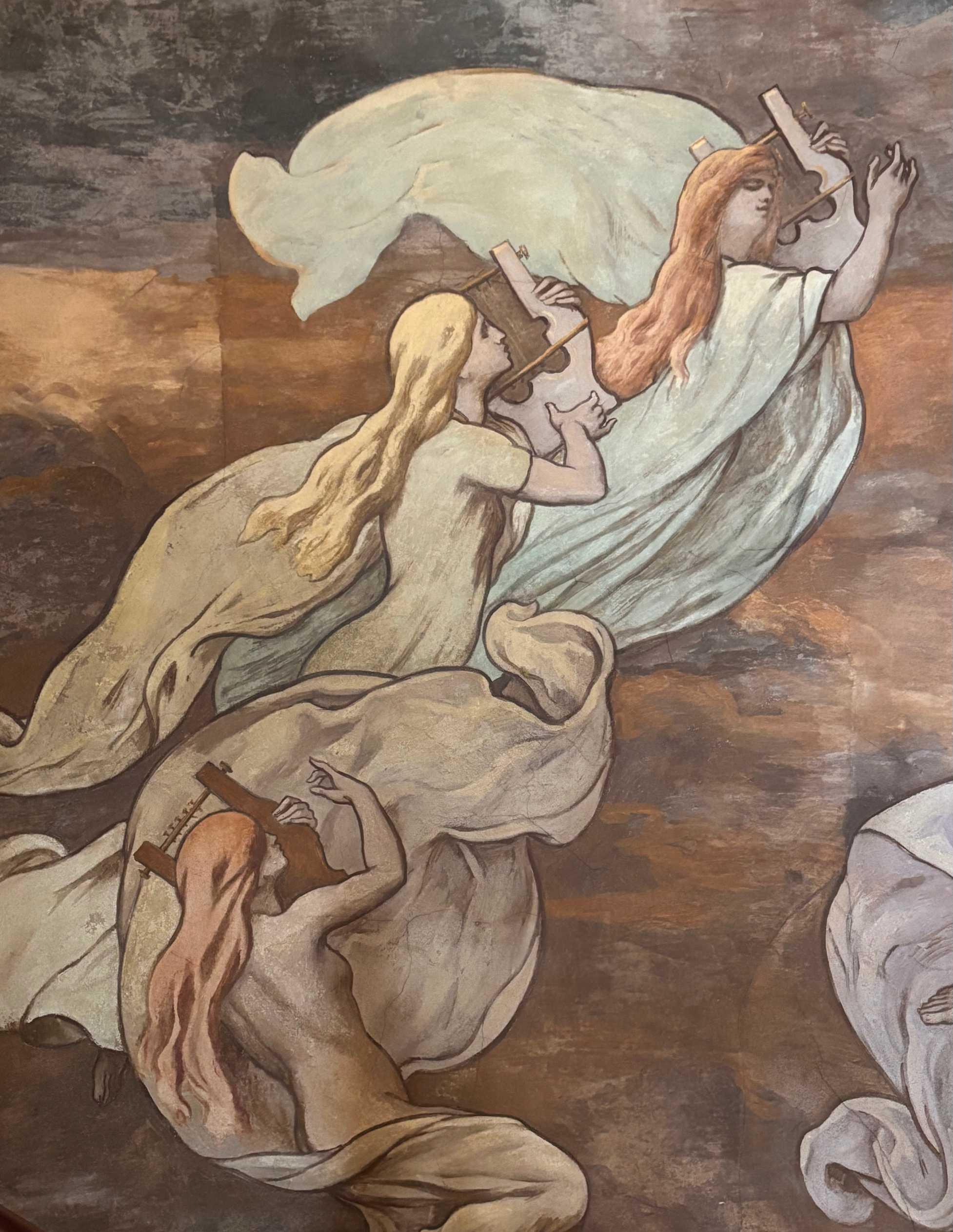
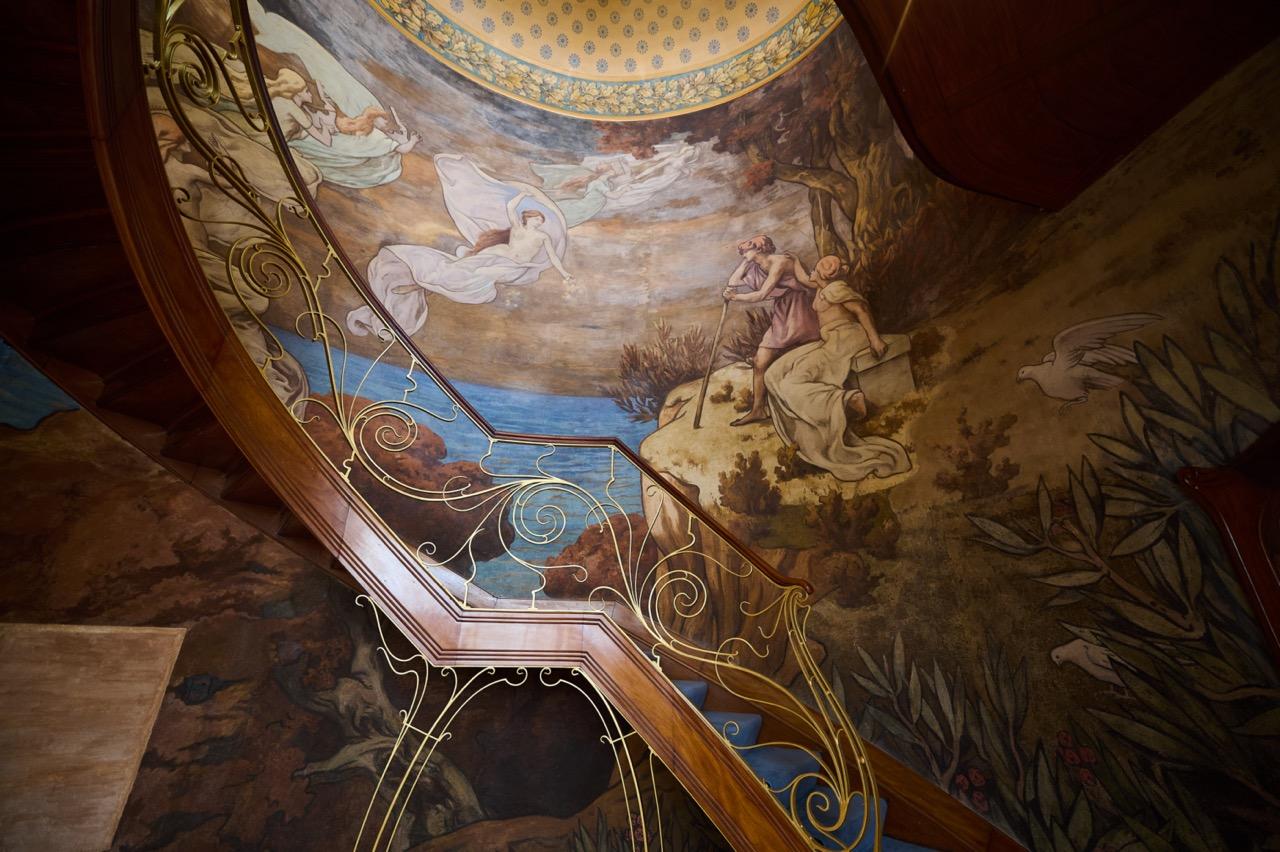
At the heart of the Hannon House, Paul‑Albert Baudoüin’s fresco The Joys of Life (1904) is far more than a decorative element. It shapes the space and turns the staircase into a place of quiet reflection. Designed from the outset to blend with the architecture, the fresco reflects the Symbolist ideal of the total work of art, where painting, architecture, light and decoration come together in a single experience. Monumental and immersive, it gives this transitional space an atmosphere that is both intimate and solemn. Through its pastoral and allegorical subject, set in a twilight Arcadia, the fresco celebrates the harmony of nature and the “joys of life”, offering a peaceful vision of the relationship between humankind and the cosmos.
Baudoüin’s correspondence allows us to follow the creation of the work in detail. It was his first fresco painted in a private interior. Commissioned by Édouard Hannon, it was completed between January and March 1904, after a meeting in Paris and a period of technical preparation. Baudoüin sought to revive fresco painting as a demanding and noble technique. Executed in Brussels under strict technical conditions, the work shows his view of the fresco as a living surface that becomes part of the wall itself. This close integration is visible in the absence of a traditional frame, replaced by a painted vegetal border that gives the work the appearance of a precious wall hanging, halfway between monumentality and domestic intimacy.
The choice of Baudoüin was also linked to personal and family connections around the Hannon household. Through marriage, the artist was related to Louise Dumesnil, born Reclus, sister of the geographer Élisée Reclus and a close friend of Mariette Hannon. Trained by Pierre Puvis de Chavannes, Baudoüin belonged to a meditative Symbolist tradition based on simple forms, restrained allegory and architectural harmony. The upward movement of the staircase, the evening light, the singing figures and the star‑filled ceiling all contribute to a unified message, in which art gives everyday life a quiet, sacred dimension.