The Maison Hannon, a movie set
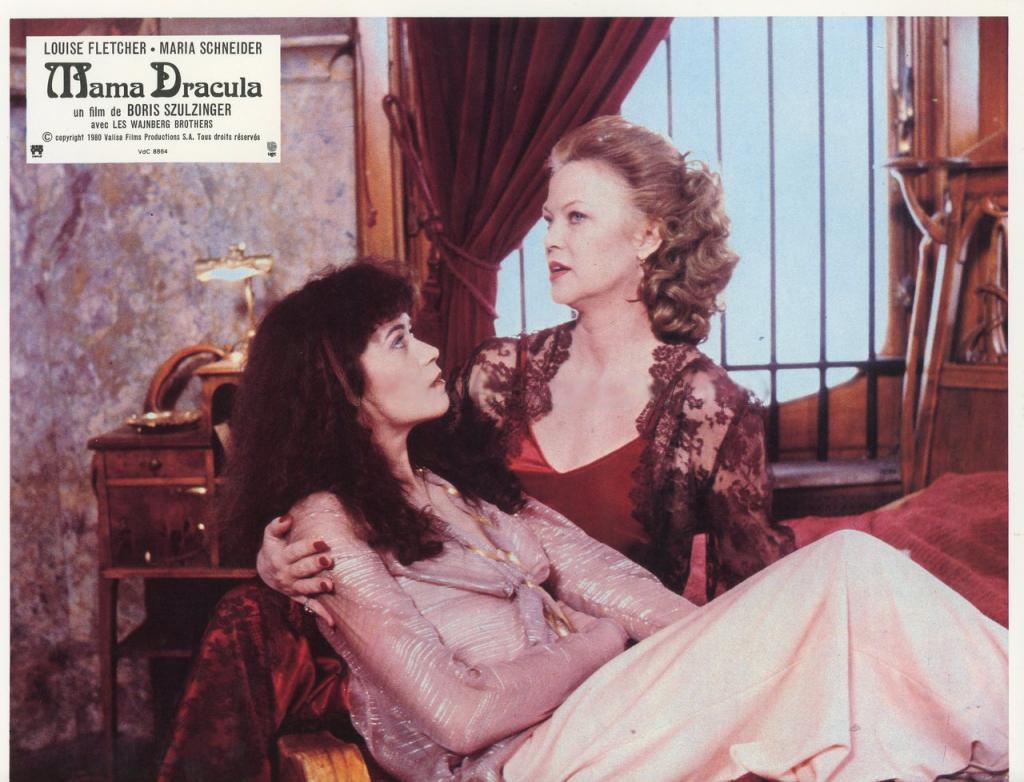
Three films, three perspectives, three ways of bringing the Hannon House to life on screen. Through them, the place transforms, shifts, and reinvents itself—sometimes as a setting, sometimes as an atmosphere, sometimes as a projection.
In Mama Dracula (Boris Szulzinger, 1980), the house is absorbed into a fantastical and deliberately kitsch imaginary world. Associated with other iconic buildings of Brussels Art Nouveau—the Horta House, the Max Hallet Hotel, and the Aegidium—it contributes to the construction of a fictional castle. Stripped of its own identity, it becomes a fragment of a composite set, serving a Gothic aesthetic. This interpretation, widely shared in Anglo-Saxon visual culture, readily associates the sinuous forms of Art Nouveau with unsettling atmospheres. Behind this distortion, however, the film plays a decisive role: by featuring the Hannon House alongside works by Victor Horta, it helps reveal its heritage value. It also preserves its memory: certain elements visible in the film have since disappeared, giving the film an unexpected archival value.
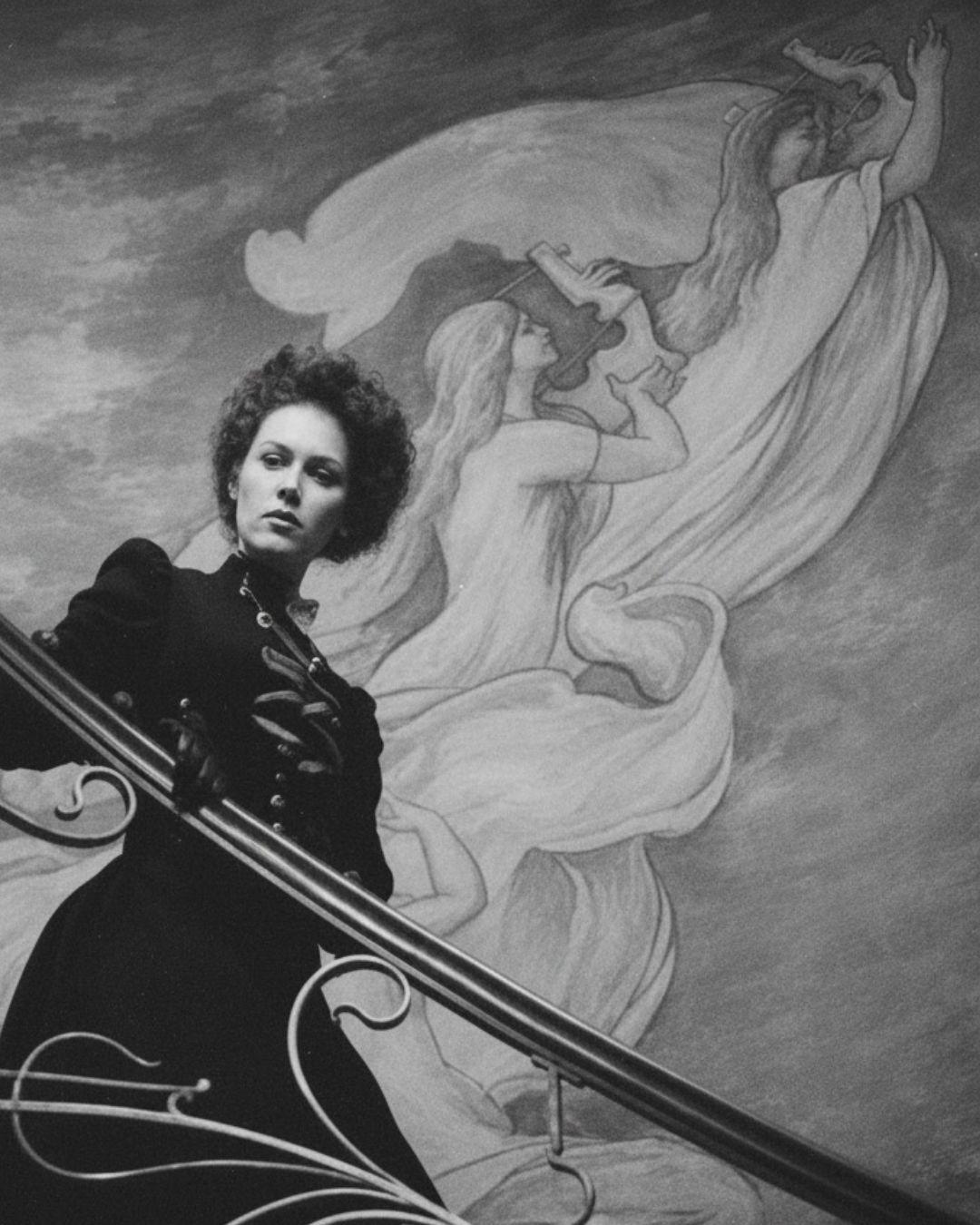
A completely different tone emerges in Eline Vere (directed by Harry Kümel, 1991), an adaptation of Louis Couperus’s novel. Here, the Hannon House no longer serves as a fantastical setting, but as a backdrop for inner life. The story of Eline, a young woman trapped by the conventions of a refined and fragile society, finds a sensitive extension in the architecture. Muted spaces, precious materials, attention to detail: the house embodies an aesthetic of restraint and nuance. It evokes a world that is both elegant and closed off, marked by a sense of weariness and decline. Art Nouveau appears here not as a spectacular backdrop, but as the language of a fin de siècle, oscillating between refinement and dissolution.
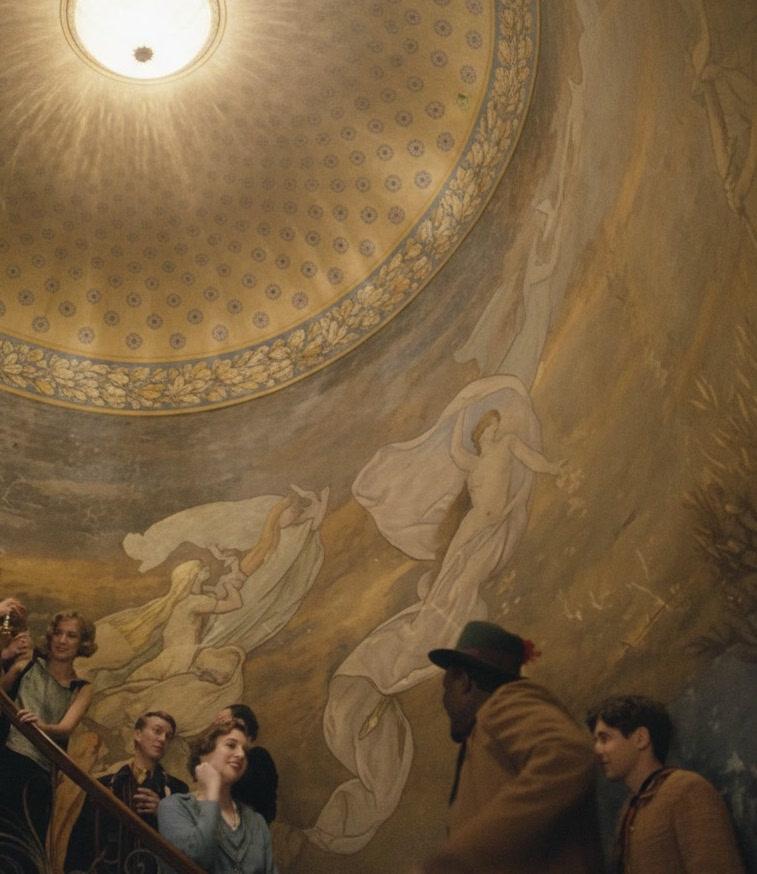
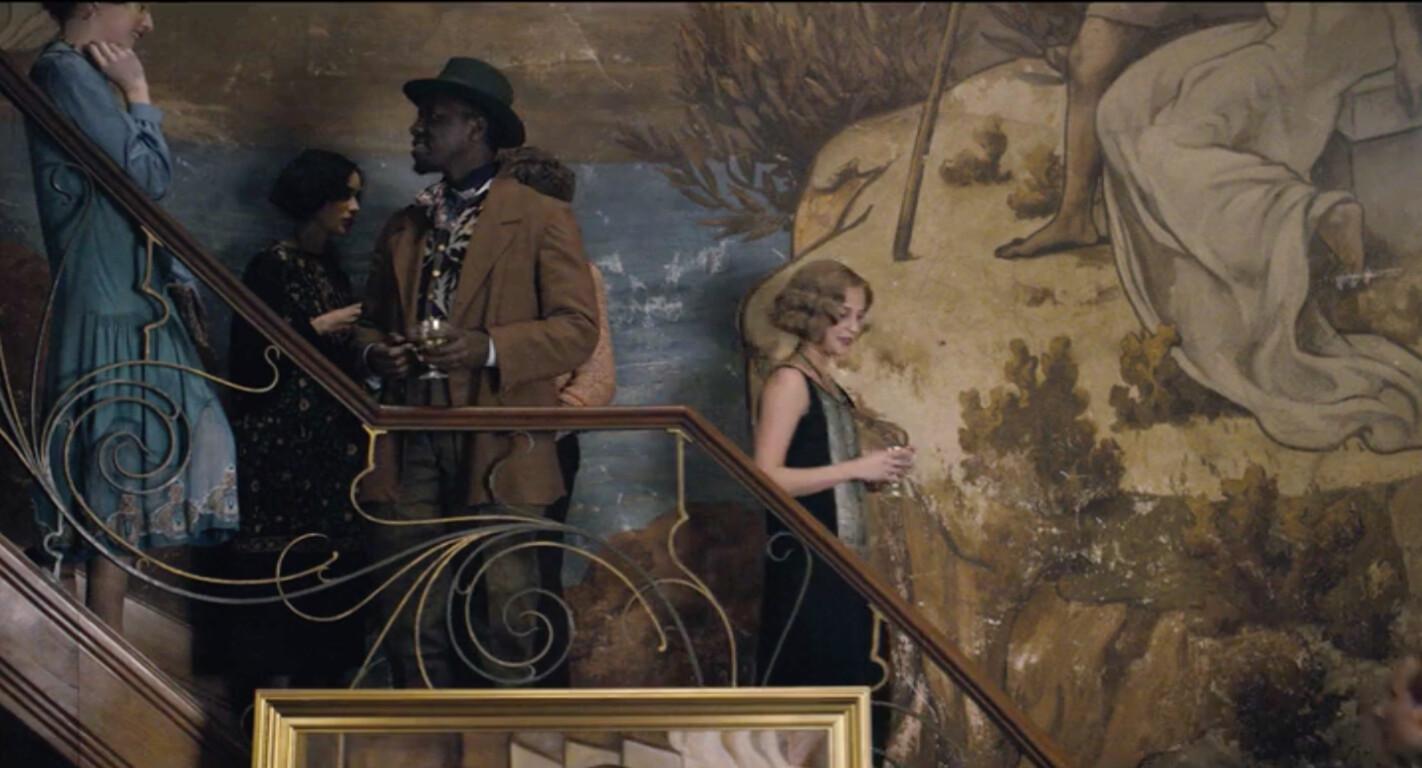
With The Danish Girl (Tom Hooper, 2015), the Hannon House undergoes yet another transformation. It appears as an art gallery, set within an elegant yet synthetic reconstruction of the artistic circles of the early 20th century. The film blurs stylistic boundaries: Art Nouveau is partially conflated with Art Deco, revealing a freer perception, less concerned with historical distinctions. At the time of filming, however, the house was awaiting restoration, with no specific purpose, and the monumental fresco had not yet regained its full presence. The cinematic image thus offers an idealized version of the place, at odds with its actual condition, yet revealing its capacity to inhabit the imagination.
Through these three films, the Maison Hannon emerges as a space for projection. Sometimes distorted, sometimes idealized, sometimes reconfigured, it transcends its own boundaries to exist in a different form. Cinema does not present a faithful image of it, but reveals other possibilities: a place capable of hosting stories, spanning eras, and continuing to produce images.