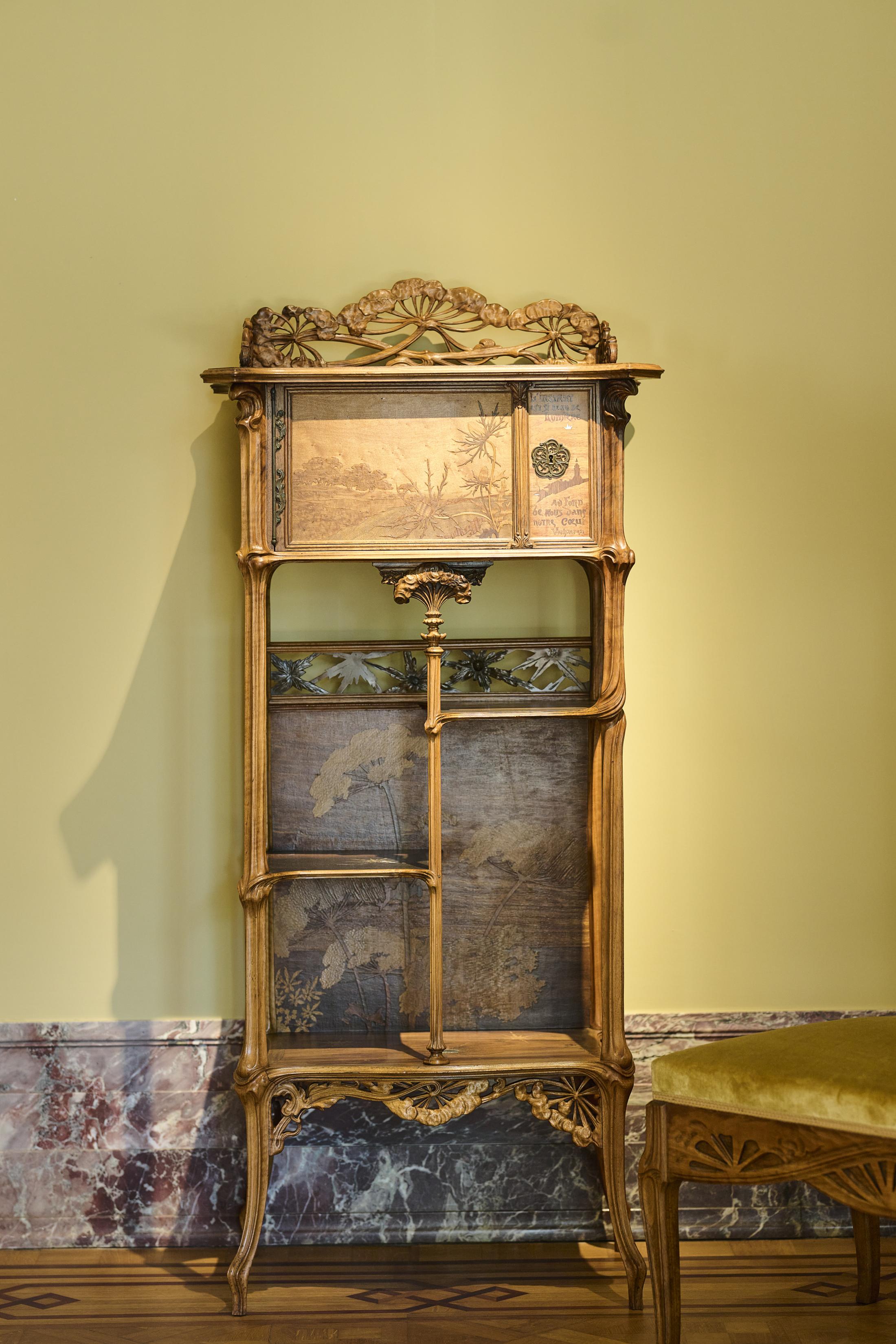
Émile Gallé: shelf ‘Aux Ombelles’
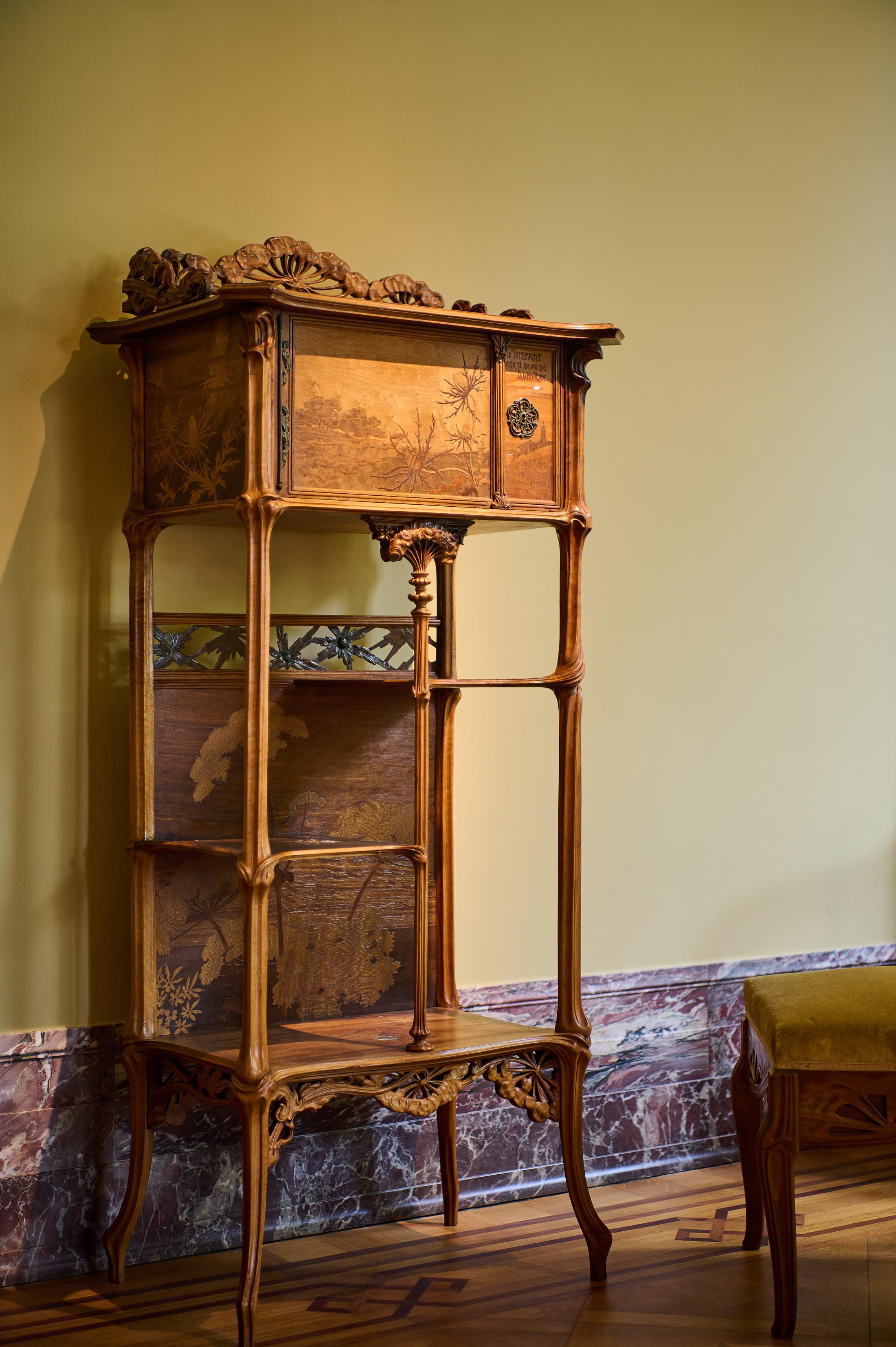
Designed for the big drawing room on the ground floor of the Maison Hannon, also known as the yellow salon, the shelf 'Aux Ombelles’ (with umbels) plays a central role in the home’s decorative scheme. The umbel motif, chosen for its decorative purpose, is explicitly mentioned in a letter dated April 2, 1904, from Émile Lang, production manager at the Gallé workshop responsible for overseeing the Hannon couple’s commission.
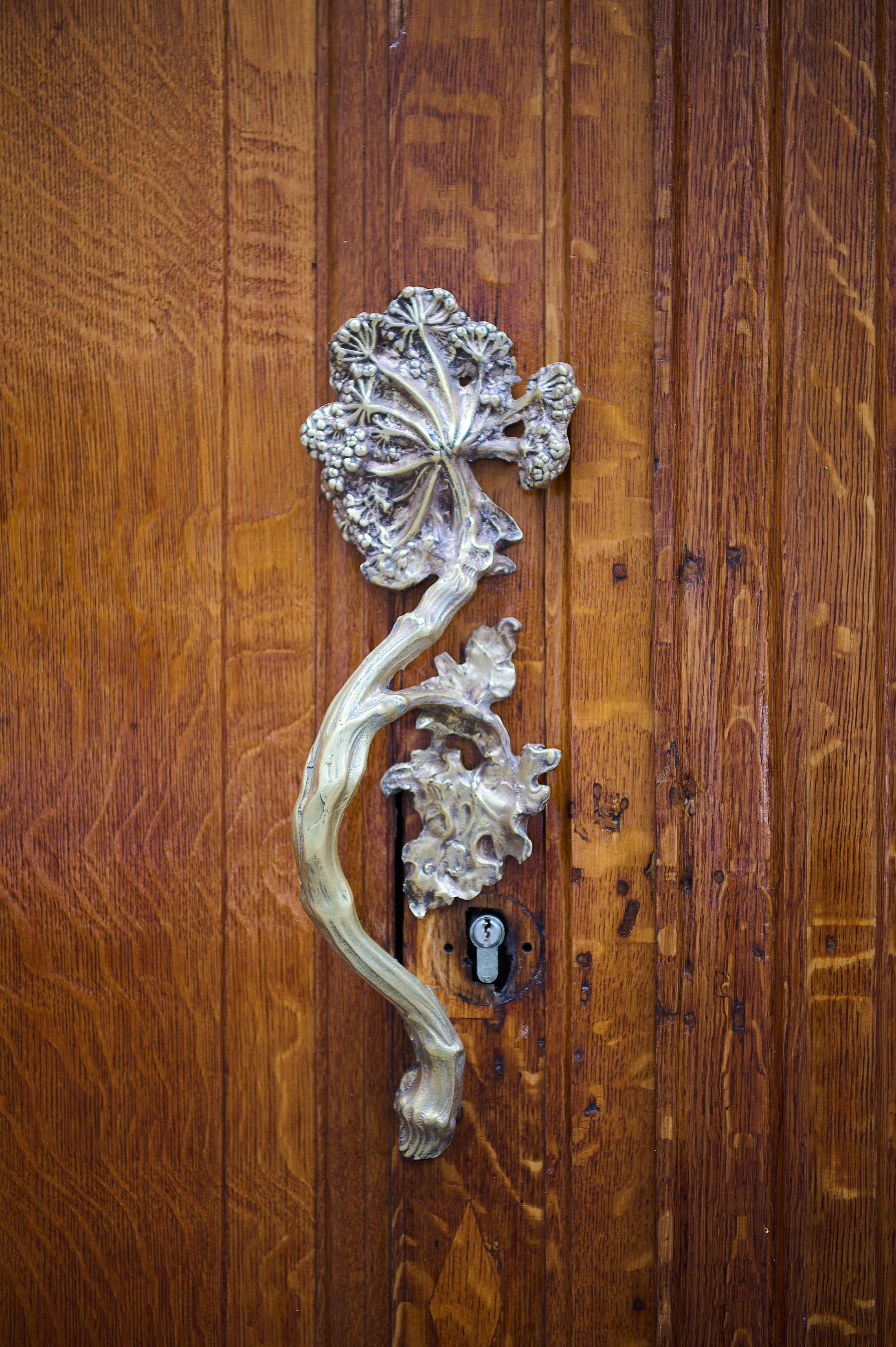
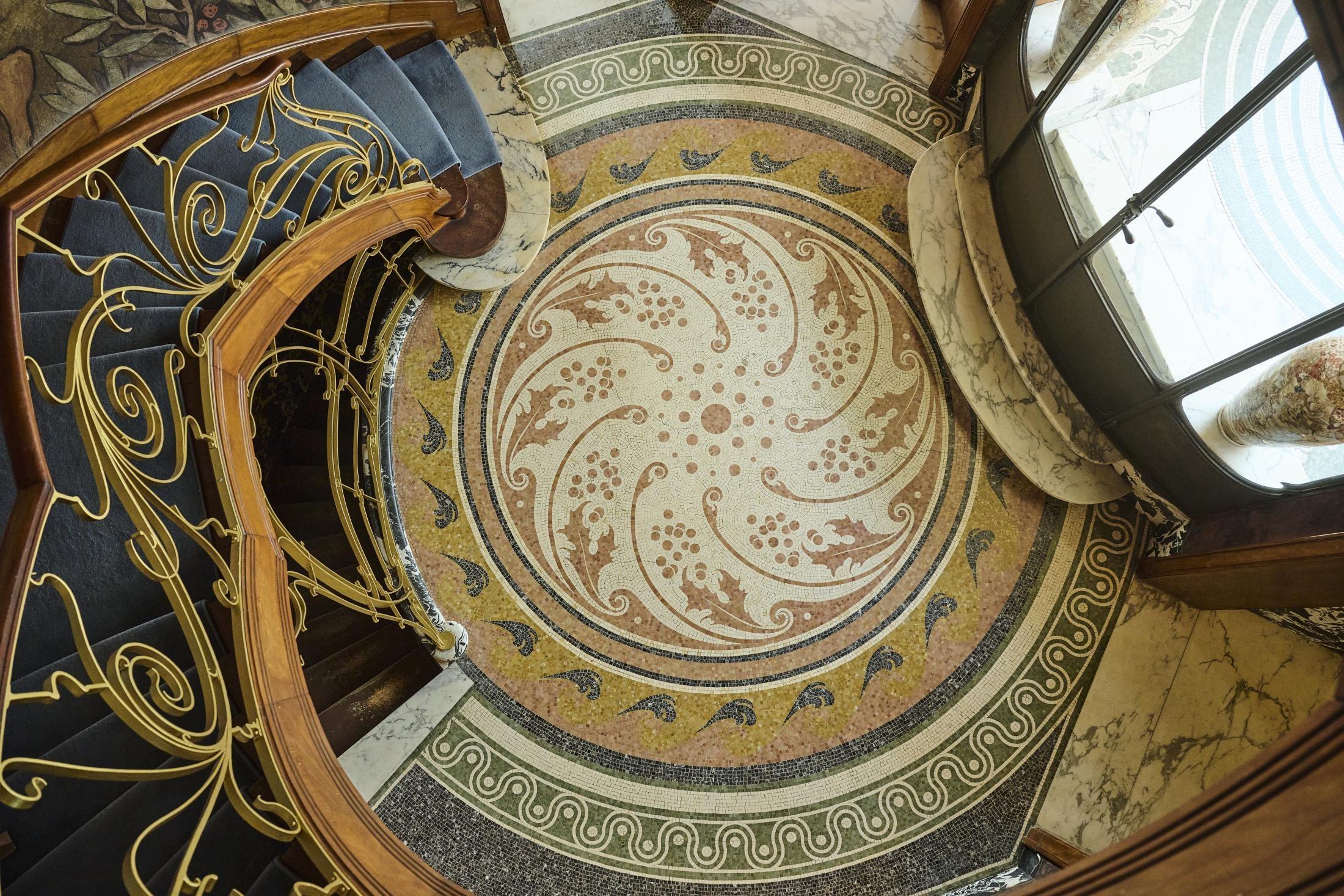
The umbel motif is one of the recurring motifs of the house. It appears throughout the interior, from the front door handle to the mosaic decoration of the grand staircase hall. Such repetition reflects a central ambition of Art Nouveau: to create harmony between architecture, decoration, and furnishings through forms inspired by nature. In this respect, Gallé’s cabinet was conceived as an integral part of the Maison Hannon rather than as an isolated piece of furniture.
The cabinet also fulfilled a practical role. The Yellow Salon housed the remarkable collection of glass objects assembled by Édouard and Marie Hannon, including works by Gallé, Daum, and the Muller brothers. Its shelves and compartments were designed to display these treasured pieces, which Gallé himself often referred to as "crystals." Positioned at the centre of the room, the cabinet transformed the couple’s collection into a carefully staged display.
Several archival documents trace its creation, including letters dated 3 October and 9 November 1904, as well as an invoice issued on 11 November 1904 indicating a price of 1,500 francs. Together, these records demonstrate the significance attributed to the piece within the overall furnishing of the house.
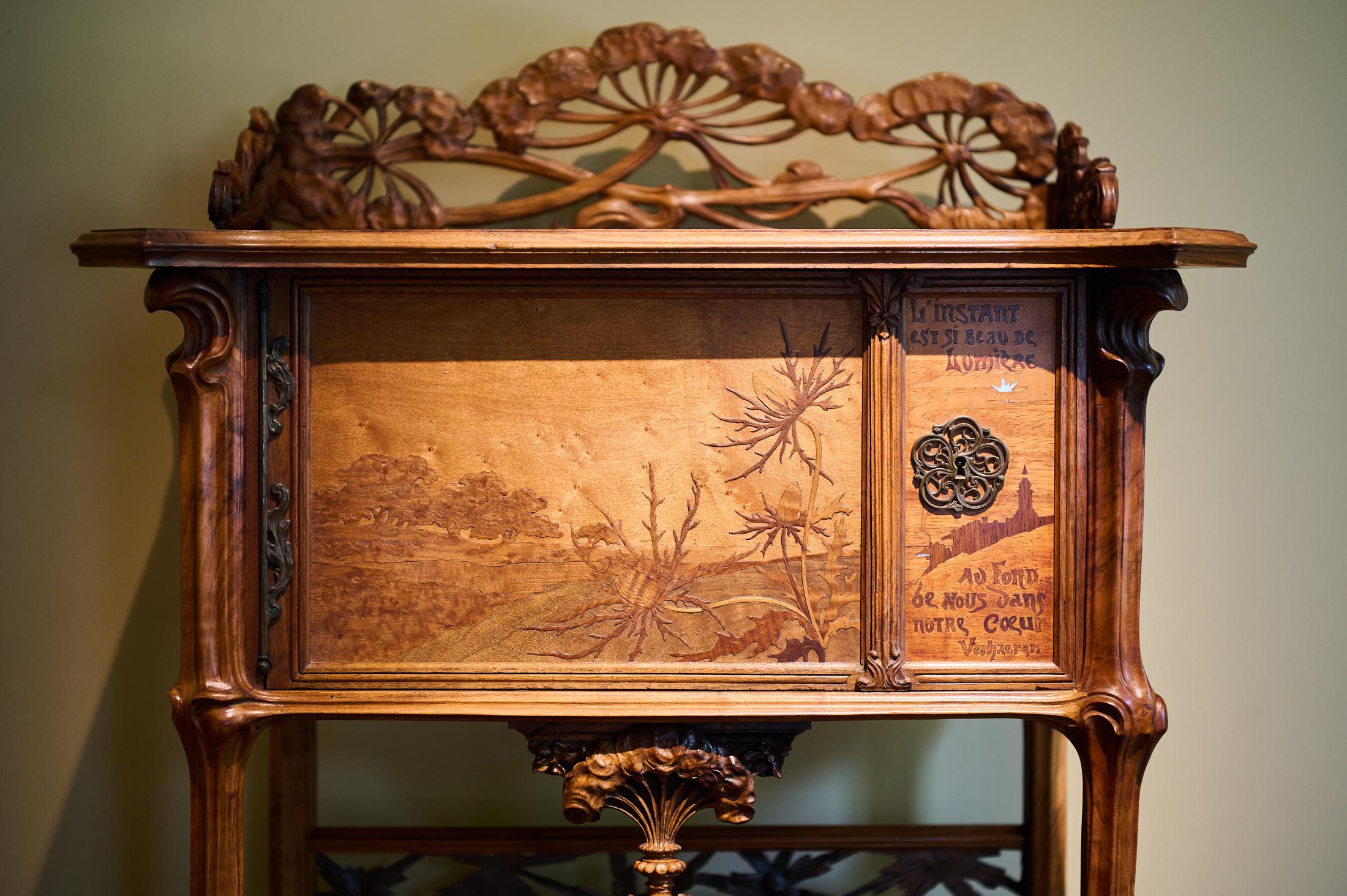
Among Gallé’s furniture designs, the Aux Ombelles series is regarded as one of his most accomplished achievements. Combining marquetry, carving, and exceptionally refined woodworking, it showcases the full range of techniques that characterised his mature production. Only six examples are known today. Widely exhibited and reproduced in contemporary publications, the model became one of the most celebrated creations of the Nancy master.
Like many of Gallé’s works, the cabinet also carries a literary dimension. It bears lines taken from Émile Verhaeren’s Heures claires:
“The moment is so beautiful with light
Deep within us, within our hearts.”
Gallé frequently incorporated texts into his creations, turning everyday objects into what he called “speaking objects.” Influenced by artistic traditions he admired in Japan, he used inscriptions to add layers of meaning and emotion. Drawing inspiration from writers such as Shakespeare, Zola, and Verhaeren, he saw furniture not simply as an exercise in craftsmanship, but as a medium capable of conveying ideas and poetry.
The presence of this cabinet in the Maison Hannon raises an intriguing question: who chose it? Was it proposed by Gallé himself as part of his broader decorative vision, or selected by Marie Hannon-Debard, whose influence on the home’s interiors was undoubtedly important? The surviving sources provide no definitive answer. What seems likely, however, is that the Hannons wished to acquire one of the most celebrated creations of an artist who, by 1904, enjoyed an international reputation.
Generously lent by a private collector, the cabinet displayed today restores an important element of the relationship that once linked architecture, furniture, and decorative arts within the Maison Hannon. More than a museum piece, this cabinet offers a vivid illustration of the Art Nouveau ideal of the Gesamtkunstwerk - the total work of art.